In March 1917 Ampthill News reported “Mr. James Adams (late organist), now Pte. J. Adams, A.S.C., writes that he has been removed from Bath to Aldershot.
He finds Army life very strange and greatly misses his Sunday duties.”
Nothing further is known about James.
Lewis Ansell was a Private in the East Surrey Regiment. He lived
on the High Street. He was born in Clophill in 1891 and on the 1911 Census is
living with his parents and 4 siblings on the High Street. His father, William
was a bricklayer and Louis was a bricklayer’s labourer. He joined the
Bedfordshire Regiment and served in Egypt. His term of service expired but he
then joined the East Surreys. In April 1918 “Ampthill News” reported that he
had been wounded again in France. He married Doris Sutton in Luton in 1926 and
he passed away in Biggleswade in March 1958.
(identity unclear but possibly George born in Clophill 1863?)
He married Ruth Cunnington (sister of Cunnington brothers below) in 1913.
Ampthill News reported that George served with the ASC Mechanical transport and by 1916 was promoted to Corporal and was home on leave.
He had been discharged due to rheumatic fever but re-enlisted as soon as recovered.
In 1917 the paper reported as follows:-
“Corpl. G.W. Appleby, who is on active service in France, has been transferred from the Heavy Artillery Motor Transport to the 1st Field Survey Company, R.E.
He tells a rather "tall" story of the laundry work in his part of the line.
A chum of his, who noticed that his shirts generally came back minus the buttons, tried to give a gentle hint that he would like to have some buttons sewn on, by piercing holes in the lid of a small tin and sewing it on to the collar of his shirt.
His chagrin can to be imagined when, on the return of the shirt from the wash, he found that the laundry had worked a buttonhole to fit the "button".”
By 1918 the paper said that George had served for 16 months.
His wife died in 1921.
In March 1915 Ampthill News reported that F. Ashley, had been wounded, but was now progressing as favourably as can be expected.
It is probable that this is Frank Ashley, born in Clophill in 1878.
Frank married Ethel Fennemore in 1907 and by 1911 he is working as a House Decorator, living at 63, High Street.
Frank & Ethel continued to live there until his death in 1956.
William Billington was a Sapper in the Royal Engineers. He joined up in
January 1917 and was immediately posted to France. There he was involved in
Road Making at Vimy Ridge, Ypres, Cambrai and on the Somme. He remained
overseas until the cessation of hostilities and returned to the UK to be
demobilised in March 1919. He received the General Service and Victory Medals.
He lived at 1, Barton Cottages, High Street, Clophill.
He was born in Silsoe in April
1877 and on the 1901 census is living in Silsoe with his wife Ada (Roberts),
who is 34 years old. William is slightly younger (33) and they have 4 daughters
and 2 sons living with them. 1 child had died previously. William was a Market
Gardener. In the 1911 census they were now living in Bedford Cottages, Jacques
Lane, Clophill. William passed away in April 1955, aged 77.
George Bone was born in Caldecote in 1887 and was the son of James and Emma Bone of Glen Farm, Great Lane. He was therefore brother of John Bone who is named on our village memorial. He married Emily Sharman in 1909, by 1911 he was a Cowman living in Turvey. He enlisted with the 1st Bedfordshire Regiment, known as the Yellow Devils when war broke out and was wounded at Mons. After he convalesced he was promoted to Corporal. In 1916 George was twice wounded at Ypres and was sent back to Winchester to spend months in recovery. Later that year he confirmed receipt of parcels that he and H Harris had received in the trenches. By 1918 he had been promoted to Sergeant and had joined the Command Depot in Ampthill to recover from trench feet, however he was involved in a cycle accident and had to go to Cambridge for “an amputation.” By July he had returned to the unit in Ampthill.
In 1939 he was working as a Farm Carter and living in Cold Brayfield nr Newport Pagnell. He died in Bedford Hospital in 1940.
Thomas Boyles was born in Aylesbury in 1886.
He married Charlotte Peat in Clophill in 1912. He
enlisted in 1915 in Watford, where he was living at the time. His address was
later given as High Street, Clophill (his wife’s family home.) He gave his
occupation as Grocer/Draper’s Porter. He became a Private serving with the 3rd
Battalion, Buffs (East Kent) Regiment in Salonika (Macedonian Front.). In 1918
he had to return to their Depot in Canterbury as he had malaria.
He died in 1952 having had one son, David, born in 1920.
Frederick William Braybrook was born in Clophill in 1871.
He married Emma Wildman and they lived in “Main Street,” Clophill until at least 1901.
He was a shepherd at this time.
They had 10 children together, 7 of whom survived.
Sometime before 1911 they moved to Luton where Frederick worked as a Carter for the Borough Council.
Frederick was a Private in the Bedfordshire Regiment; he volunteered in March 1915 and was drafted to India where he was engaged in duties at various garrison outposts.
He was sent home and discharged in 1918 for causes due to his service in July 1918.
Upon his return he learned of the death of his eldest son detailed below.
He died in 1938 in Luton.
Frederick Brown is thought to be the Frederick Brown that was born in 1879 in Maulden.
He married Kate Braybrook (sister of F W Braybook above) in 1900.
In 1901 they were living in Back Street and he worked as a Shepherd.
By 1911 they had moved to Church End, Haynes.
They had had 5 children by this time.
Fredrick served as a Private with the Bedfordshire Regiment.
He was sent to India in 1916 and was still there in July 1918 when he wrote to his wife stating that the climate was “very trying.”
By 1939 the family are living in Ampthill and Frederick is working as a Market Garden Labourer.
Frank Bull was a Private in the 860th Area Employment Company. He
lived on the High Street from at least 1918 to 1922.
It is believed he was Frank Lancelot Bull, born in
Islington in 1884, married locally to Rosetta Palmer (who’s family lived on the
High Street) in 1909. They had a daughter called Marjorie and went on to live
in Southgate, London where Frank worked as a jeweller’s shop assistant.
Frederick Horatio Bunny lived
in The Slade. He enlisted in the Surrey Regiment on 18th November
1914 but was discharged through sickness in the following September. He must
have recovered as in 1919 he was a Sapper in the Royal Engineers and by 1921
had been promoted to Lance Corporal.
Edward Crawford Burrows was a Captain in the Essex Regiment. He lived on the
High Street. In the 1911 Census he is shown as owning Ivy House, although he
was living in Temple Court, London. He appears on several censuses as the owner
of Ivy House but always living at an address in London. He qualified as a voter
in North Bedfordshire constituency (as it was then described) because of the
ownership.
James Burton was born in
Little Cranfield, Essex in 1872, he worked in 1911 as a market gardener’s
labourer, living in The Slade, Clophill. He enlisted in Bedford in 1916,
serving with the Road Construction Company, Royal Engineers. His service papers
show his occupation as “Roadman.” He was married to Selina, and had 4 children
by 1911 - Sydney, Arthur, Selina & Fredrick. He died in 1938.
Sidney Charles Burton was born in Little Canfield, Essex, on 19th
July 1894 and he lived in Hoddesdon with his parents and siblings at the time
of the 1901 Census. By 1911 they were living in The Slade, Clophill. His
father, James was a Market Gardener’s labourer (see above). His mother
was Selina and Sidney (or Sydney) was, like his younger brother, Arthur, a Farm
Labourer. He became a Private in the 100th Labour Corps. He died in
Ampthill on 29th February 1988.
Earnest J. Bushby (or Ernest) was a Private in the
Grenadier Guards (Machine Gun Regiment). He joined in January 1918 and after
completing his training worked with his unit in England. As he was medically
unfit, he was not transferred to an overseas theatre of war. He was demobilised
in January 1919. He lived in Jacques Lane, Clophill.
In 1911 Ernest was one of 6 surviving children living with his parents George (47), a
shepherd, and Eliza (49) in Jacques Lane. Ernest was a schoolboy born in April
1899. When he enlisted he gave his occupation as Market Gardener and his
height as 6’ 1”. He was accepted as a Reservist in June 1918. He died in March
1965, aged 65.
George Frederick Bushby was a Private in the 2nd London Regiment
(Royal Fusiliers) having joined in June 1916. In 1917 he was drafted to France
but soon after his arrival on the Front was wounded and taken prisoner. He was
held in captivity until after the Armistice, when he was released and sent
home. He was demobilised in March 1919 and he received the General Service and
Victory Medals. He lived in Jacques Lane, Clophill.
George was 1st
cousin to the Bushby brothers above and below. He was born in 1898 and on the
1911 census was a schoolboy living with his parents Frederick, an Agricultural
Labourer, and Emily (Hare). They were living in Jacques Lane and in addition
to George Frederick there were also 2 further sons and 1 daughter. George died
in Pontefract, Yorkshire in September 1981, aged 83.
William Bushby was a Rifleman in the King’s Royal Rifles. He volunteered
in October 1915 and in April 1916 was drafted to Egypt. He later proceeded to
Palestine and was involved in fighting at Jaffa, Gaza and Haifa. He returned
home and was demobilised in April 1919 and he received the General Service and
Victory Medals. He lived in Jacques Lane, Clophill.
He was Ernest Bushby’s elder
brother. William was described as a Jobbing Gardener on the 1911 census. He was
born in April 1892.
Frederick William Case was a Lance Corporal in Motor Transport, Army Service Corps.
He was born in 1895 and in 1911 he lived on the High Street with his parents William and Ruth (née Bottoms,) elder brother, Harry (see below,) and niece.
His occupation was Labourer, Market Gardener. He married Edith Deacon in December 1918 and died in Bedford in 1978.
Harry Case was born in Clophill in 1885.
Harry became a dairy farm worker and later a bricklayer’s labourer. Unfortunately Harry gained a criminal record in 1911 as he was caught riding his bike in Bedford without having any lights on.
He is thought to be the Harry Case who married Florence Wells in 1915 in Belper, Derbyshire.
He joined that Notts and Derby regiment in 1917.
He served in France and received gunshot wounds to his chest and on another occasion to his back and legs.
He further marked his record by going AWOL for 3 days early in 1918, later that year he became a prisoner of war for 5 months.
He was discharged in 1919. By 1939 it is believed that he and Florence are living near Alfreton and he is an unemployed coal hewer.
Thomas James Clark was born in Lewisham in 1889. He was a tailor who had
married Isobel Phillimore in 1913 in Deptford. They had 3 children. His
connection to Clophill is uncertain, but his address was given as the High
Street in 1918 & 1919’s Absent Voters List. He was a Private in the Machine
Gun Corps, serving in Belgium & France. He had influenza in 1917 and in
1918 he was shot in the jaw and underwent a critical operation in Guys Hospital
in 1916. He died as a victim of WW11 in 1944 in Deptford.
Edward James Cole was living in Silsoe Road, Clophill when he enlisted
at Bedford on 11th December 1915. He was born in 1881 and gave his
age as 34 years and 2 months. His occupation was stated as Fruit gardener (late
shoeing smith). His next of kin was Edith Nellie Cole and they had been married
on 10th August 1908. At this time they had 4 children, Nevil James
(27.06.11), Effie Ruth (07.07.12), Irene Frances (07.09.13), and Edith Nellie
(27.05.15). Later there would be Raymond Charles (09.07.17). His enlistment was
approved at Woolwich on 28th June 1916 and during his early service
he passed a test to qualify as a shoeing smith. As part of the service record
there is reference to him being a “cold shoer”. When he was demobbed on 10th
January 1919 his rank was described as s/smith and his address was given as
Water End, Maulden.
William Cole was a Corporal in the 5th Lancers. He was
born in about 1895 in Hall End, Maulden. In the 1911 Census he is shown as
living at 3 Forester’s Cottages, Back Street with his parents, 1 brother and 5
sisters. His father, Charles, was a Gardener’s Labourer and William was a Farm
Labourer. Two of his sisters were Hat Machinists. “Ampthill News” reported in
February 1916 that William had been home on leave and had recently been
promoted to Corporal. In December the paper reported that “
Corpl. Farrier William Cole,
of the Lancers, eldest son of Mr. and Mrs. Charles Cole, was home from Dublin
last week on final leave. He was formerly in the employ of Mr. Arthur Cakebread
as shoeing-smith.”
Jack Coleman (also known as John) was a Private in 10 Queen’s
Royal Regiment West Surreys. He was born in Clophill in 1881 and in 1891 lived
in the Slade with his father, Albert, a Farm labourer, his mother, Mary, and 3
brothers and 3 sisters. By 1901 Jack was also a farm labourer and had 2 more
sisters. By 1911 there were only one brother and one sister plus Jack living
with their parents, who had had 14 children in total, 12 surviving.
Hon. Geoffrey Duke Coleridge was born in 1878 in Ottery St. Mary, Devon and was educated at Eton and Oxford.
In 1911 he lived at Ivy House, High Street with his wife, Jessie Alethea (née MacKarness,) his sister, two young sons and 3 servants.
He was at that time a Land Agent.
Their 3rd son Ronald is thought to have been born here, they continued to live at the house until at least 1914.
Before the war he had served as a Lieutenant in the Devonshire Regiment and he re-enlisted with the 4th Battalion Devonshires, being promoted to Acting Captain in 1917.
He left the army in 1919. In 1927 he became 3rd Baron Coleridge of Ottery St. Mary.
He travelled extensively.
As Baron he was responsible for making the archive of his 3x Great Uncle, Samuel Taylor Coleridge available to researchers.
He was a JP from 1929 to 1952.
He died in 1955 at the family home of The Chanter’s House, Devon, he left an estate of over £95,000.
William Collis was born in
Kettering in 1872, he married Elizabeth Richardson in 1909, in Clophill. In
1911 they lived in Back Street, with their daughter, Mabel and Elizabeth’s 3
other children. He was a farm labourer. William had signed up in 1891, serving
with the Northamts Regiment until transferring to the Bedfordshire Regiment in
1913. During this time he served in India, Singapore and South Africa. In 1914
he reenlisted (aged 42) with the Bedfords and was later transferred to the
Royal Defence Corps.
He died in 1941 at the time of his death he lived at 18 Bedford Road, Clophill.
Ernest William Cooper lived
in Mount Pleasant, Clophill and served with the Agricultural Labour Corps. We
are unable to find any other certain information relating to Ernest, however in
1909 an Ernest Cooper was fined for keeping his son, Albert, from school whilst
his wife was at work and Ampthill News reported in 1918 that Ernest Cooper was
awaiting orders sending him to India.
Humphrey Ladds Cunnington was born in Surrey in 1889 but by 1891 the family lived in the School House, High Street, with his father, Humphrey, his mother Mary (Ladds), both teachers, and his brothers (see below) and sisters.
He served as a Sergeant with the East Surrey Regt., from 1914 until he was discharged on medical grounds in 1916- the year he was wounded.
The following intelligence was sent to Clophill by the Rector, who was a chaplain in France; in July 1916 He wrote:- "I am sorry to have to tell you that Humph is wounded. He came in just as I went on duty this morning. He recognised my voice and called out. He has been hit in the face and right eye, but we hope he will be all right very soon. The eye is alright at present and it is hoped that it will be saved. He is very fit and well in himself, and is not suffering shell shock or anything like that. His "tin hat" undoubtedly saved him.”
Ampthill News reported –“Sgt. Cunnington has been out nearly 12 months and for the greater part of the time has been in the trenches.
Although he has had one or two narrow escapes, he has not been actually hit before. In a letter home," he says:- "We have had three days of the most awful bombardment in history, so the time for real action must come very soon.
These 3 days have been absolute hell with the lid off, especially for the Boche; our guns have smothered his trenches with huge shells and trench mortars; we have given him periodical doses of gas and filthy smoke, and there have been nightly bombing raids.
After every dose of gas or smoke, when he must leave his dug-outs for fear of suffocation, we have rained shrapnel on him.
What a difference from those days at Ypres and Hill 60, when the boot was on the other foot!
He hasn't replied on anything like the same scale, but we have suffered pretty heavily, as our Company has been 'up' all the time, and I believe our 'heroic remnants' have the honour of leading the attack.
At any rate I hope so. I think this war should make another unthinkable, for this isn't war, it is murder pure and simple, and the side that can use most frightfulness will win.
If everything goes on all right we should finish them off pretty quickly, and be home again, never more to leave the shores of old England.
I don't think any of use quite appreciated the old country till we came out here."
Humphrey married Edith Green in 1919 at which time he was a civil servant, a job he would have until at least 1939. He died in 1945, he lived in Clapham Common at this time.
Lionel Healey Cunnington was born in Clophill in 1898. He enlisted in 1917 and was a Telegraphist in the RNVR on HM Tug “Marsden” serving in the Mediterranean.
By 1918 he had also become a member of the cathedral choir in Gibraltar- where his boat was stationed. In 1919 he was seized with Malaria whilst on a voyage from Port Said to Aden and spent time in hospital in Suez.
He returned home later that year.
Lionel became a schoolteacher and in 1924 he married Daisy Warwick.
They had 3 children.
They lived in Twickenham for many years but by 1939 they lived in Ottery St. Mary, Devon.
In 1945 they lived in The Vicarage at Eaton Bray, (although he & Daisy also appear on another Electoral Roll as living in Dunstable.)
They later lived in Heath & Reach. Lionel died in Chichester, aged 93.
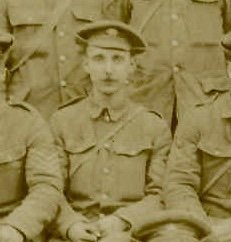
Raymond Cunnington was born in Clophill in 1891.
In 1918 Ampthill News reported on Raymond’s short life as follows:-
“It is with much regret that we record the death of Raymond Ernest Cunnington, second son of Mr. and Mrs. Cunnington, Clophill.
The deceased was 26 years old, served in the Royal Navy for nearly four years.
A severe attack of pleurisy left a weakness in the left lung, and in 1911 he was invalided suffering from tuberculosis.
After a period at home his health improved and he entered the Mercantile marine, making voyages to South Africa, Australia and New Zealand.
At the outbreak of war in 1914 he enlisted in the 6th Bedfords, being passed medically sound; but after a month's training at Aldershot his health gave way, the old lung trouble reappeared.
He was discharged in December 1914. In 1915 he spent some months in a sanatorium, but did not derive much benefit.
He has since been getting gradually weaker. His long illness was borne with exemplary patience and cheerfulness, and the end came on Tuesday, the 3rd inst.
The remains are at the Old Church.”
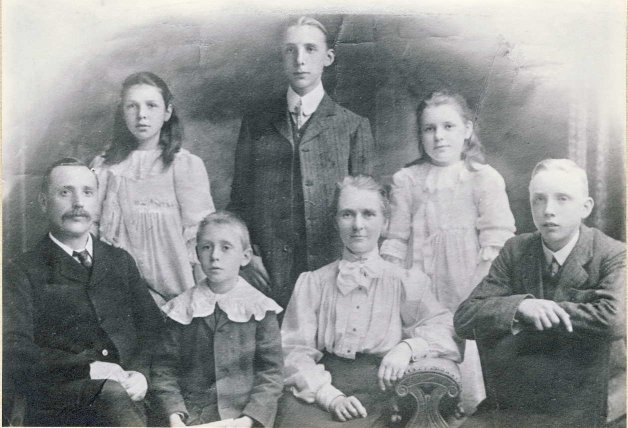 This photo is of the Cunnington family. Front seated: Humphrey Cunnington, Lionel, Mary Ann (nee Ladds), and Raymond. Back standing: Ruth, Humphrey, and Kathleen. Ruth was married to George Appleby above.
Owen enlisted in the 1st King’s Shropshire Light Infantry as 31434 on a 3 year Short Serve Commission in November 1914. He gave his age as 20 years and 2 months, which would mean that he was born in 1894. He was actually born on 23 September 1895. He was born in Clophill and lived in 1911 in Hall End. He was a “Gardener Domestic.” He joined up in Oswestry and gave his occupation as Chauffeur. He was promoted to Acting Lance Corporal in December 1915 and Acting Corporal in February 1916. These temporary promotions were signed off by 2nd Lt. W. Deedes, who was the father of Bill Deedes, personal friend of Denis Thatcher, Cabinet Minister and long time editor of the Daily Telegraph. Owen was made Acting Sergeant in February 1917.

At the end of 1917 Owen joined
the Training Reserve Battalion and reverted to the rank of Private. He was
drafted to the Western Front in March 1918 and promoted to the substantive rank
of Lance Corporal in May 1918 and Lance Sergeant in October of that year. He
took part in numerous engagements in the Retreat and Advance of 1918, including
those near Arras, Ypres, the Marne and the Aisne. He joined the Army Reserve in
March 1919 as a Lance Sergeant. On leaving military service he was described as
“Military Character Good” and was living at Hall End. Medically he was
described as A1. He received the Victory Medal and the British Medal.
He later married Amy Blagg, she
was one of the first women to join the WRAF and was based at Cardington.
He died in January 1972, aged 76.
Many thanks to Mary Stokes for supplying the photo of Owen.
Arthur John Dimmock was born in Fenny Stratford in 1888 and enlisted in 1914.
He lived at 4 Bedford Cottages, Jacques Lane and was married to Alice Eells. He was a shoeing smith and was posted to France in 1915.
He served in France until Februar 1918. He was demobbed in March 1919 and returned to live at The Lodge, Church End, Haynes.
William Dimmock, Royal Field Artillery. Little is known of William, other than he was served in France from the outbreak of war and he was a farrier. He worked for a Mr Cakebread who ran the Blacksmiths at what is now the Old Forge next to The Green.
In 1918 he was severely wounded near Ypres but it is thought that he recovered well.
Harold Doggett lived in 2, Bedford Cottages, Jacques Lane. He was a
Private in the 3rd Sussex Regiment. On the 1911 Census, 20 year-old
Harold was living with his widowed mother Hannah, (aged 65), 2 older brothers
and a younger nephew. His mother has no occupation shown but she had given
birth to 16 children, 11 of whom were still alive. His father, William, a farm
labourer had died sometime between 1911 and the 1901 Census. Harold is described
as a Domestic Horse Keeper and having been born in Clophill. He married Grace
Shotbolt in 1927. In 1959, according to the Electoral Roll, Harold and his
wife, Grace, were living at 16, Bedford Road along with Hubert and Emily
Berrington. In 1962 just Harold and Grace lived there. Harold passed away later
that year, aged 71.
Frederick John (Jack) Durston
Jack was born in the Rising Sun, Clophill in 1893, his
grandparents (The Garners) had been the licensees. He
continued to live at The Rising Sun when his father became
the licensee. Long Jack, as he was known was working as Farm
labourer in 1911. He was one of 8 children.
He served with the Sportsmen’s Battalion, playing as a
Drummer in their band. He went to France in 1915, serving as
a Corporal. Jack also became a Goalkeeper for the Royal
Engineers and made 2 appearances for Clapton Orient during
leave in 1917, playing against Chelsea on both occasions. He
also played for Queens Park Rangers, Brentford, Northfleet
and Bedford Town.
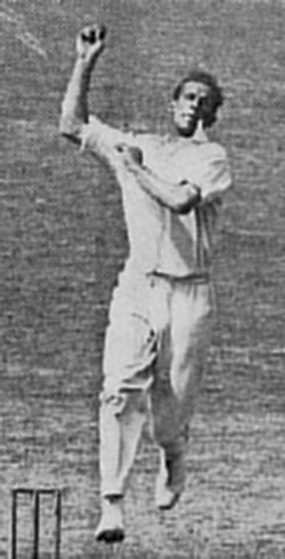
Jack married Lily Hill in 1916 and had 2 children.
He went on to become a first-class cricketer who played for
Middlesex and England. He is a member of the Middlesex Hall
of Fame. He ran a cricket school in Middlesex between 1924-
58. He travelled extensively in this role.
He died in Ealing in 1965.
Jeffrey/Geoffrey Thomas Eddy was born in Clophill in 1899 and lived in the Slade at the time of the First World War.
In 1901 he was living in Jacques Lane with his John Farr was born in Haynes in 1891, by 1911 his father, James had died and John was living in Jacques Lane with his mother, Jane and 4 of his siblings.
His mother had had 9 children. At this time John worked as a domestic gardener.
He later moved to Back Street and married Susan Rose Bailey in 1917.
He enlisted with the Bedfords in 1914.In 1915, whilst on leave, he acted as best man at the wedding of Samuel King and Susan Webb.
In 1917 Ampthill News reported that John “is home on sick leave from hospital.
He was wounded quite early in the war in the hand and arm.
After a second stay in France he was wounded again, losing an eye.”
After this injury he was transferred to the Agricultural Company and was demobbed in 1919.
In 1939 John and his wife were living in Campton and he worked as a Farm Labourer.
It is thought that he died in 1964.
Charles Eddy was a Private in the Agricultural Company, Labour
Corps. He was born in Clophill in 1883 and lived on Silsoe Road. In the 1901
census he was described as a ‘Carter on a Horse Farm”. He was living with his
father, Daniel, mother, Priscilla, and 4 siblings. By 1911, however, aged 27,
he was living at the Maida Barracks, Aldershot with the 1st
Battalion of the Bedfordshire Regiment. His brother was Percy Thomas Eddy, who
was killed in action in 1916.
In 1920 Charles married Rose Willey in Medway, Kent. He died there in 1934.
Eli Fossey was born in Ampthill in 1888. His parents were William and Susannah.
In 1911 Eli was a carman, living with his widowed mother in Ampthill.
In 1914 he married Clophill girl Amelia Kate Juffs.
Eli was a Private in the Machine Gun Corps and joined in December 1915.
He trained in England but owing to medical grounds was not transferred overseas.
He was demobilised in March 1919 and lived at 9 High Street, Clophill and later worked as an auxiliary postman and his wife as a fruit picker.
They had 7 children.
Eli died in 1959.
Percival Victor Garner was a Private in the 1st/5th
Bedfordshire Regiment. He was born in Clophill in October 1897 and in 1901 was
living in The Strand with his parents Harry and Emily (Harris). Harry was an
Agricultural labourer. They were still living there in 1911 but had been joined
by Percival’s younger sister, Nora Ella. He died in December 1971 in Shardlow,
Derbyshire.
PC John Gibson and his wife Elizabeth had four sons that served in WW1.
The family had been born in Bedfordshire, but had not moved to Clophill
until after 1911. They lived at 15 High Street Clophill – the police house- as
John worked as the local police officer.
Algernon John Gibson was born in 1889 was the oldest of the sons. He had
worked as a carpenter & wheelwright. He travelled to Australia in 1911 and
joined the Australian Navy in 1913. His war started as a stoker on-board the
Australian Battleship “Encounter.” During WW1 the cruiser became the
first ship of the RAN to fire in anger when she bombarded Toma Ridge.
“Encounter” operated in the New Guinea, Fiji-Samoa, and Malaya areas until 1916, when she returned to Australian waters. The ship spent the rest of the war patrolling and escorting convoys around Australia and into the Indian Ocean.
Algernon also served on “Penguin”- a depot ship. No further information is available for him.
Herbert Archibold Gibson was born in 1892 and worked as a Railway Clerk in 1911
when he lived in Lincolnshire. He served with the Irish Lancers. He had an
accident in 1917 but was able to return to France later that year. He returned
from the war to live with his parents in the High Street. Herbert married
Florence Ellis locally in 1922 and they lived in Biggleswade and he continued
working as a Railway Clerk. Herbert lived until 1958.
Harold Francis Gibson was born in 1895. He worked as an apprentice
Wheelwright in 1911. He served with the 12 Lancers from Dublin. He served at
the Somme and worked with the Machine Gun Corps. He was badly hurt in 1917
during a charge in France. He spent a long period in hospital and was
eventually discharged as unfit in 1918. Harold also lived with his parents, in
Myrtle Cottage, High Street, after the War. He married Edith Paige in 1918 and
they went on to have at least 10 children and lived at 13 The Green, Clophill.
Harold worked as a House decorator. Harold died in 1974.
Albert Edward Gibson was born in 1899, he served with the Royal Sussex,
having originally enlisted with the Bedfordshires. He suffered a shell wound in
France in 1916 and was discharged as unfit in 1917. In 1919 he married Mabel
Cooper in Mortlake. Their home was in Streatham, Surrey and Albert was an
engineer.
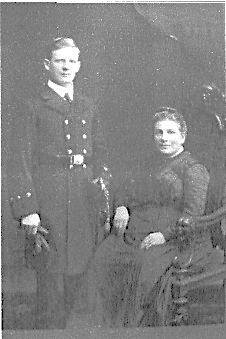
Born in Walton-le-Dale, Lancashire in 1886.
He joined the Navy in 1904.
He married assistant teacher, Edith Appleby in Clophill in 1912.
After their marriage they lived at Glebe Cottage - now Taylor's Cottage -106 High Street.
They had two daughters.
In 1914 William was called to serve in the First World War as a Gunner Warrant Officer, re-joining his ship, HMS Mermaid at Dover.
During WW1 he also served on HMS Afridi and HMS Forester.
He served in the Navy for 44 years, also serving in WWll, gaining the DSO and the rank of Commander.
His medals and many of his records are to be seen at the Imperial War Museum in London.
In 1923 the family had the “The Moorings” built (also in the High Street) as their family home.
He died in 1955.
He was a Private in the Machine Gun Corps (having also
served initially with the 4th Beds.). He volunteered in November 1915 and was
drafted to France the following year. He served at Albert, the Somme and Ypres.
In March 1917 he had a gunshot wound to the shoulder whilst at Bapaume and was
admitted to hospital in France. He convalesced in Lytham. He was severely
wounded at Cambrai in November 1917 and was sent back to England for treatment.
He subsequently returned to the Western Front and he was seriously wounded and
gassed in March 1918. He was demobilised the following year and he received the
General Service and Victory Medals. He lived in High Street, Clophill.
He was born in Clophill on 29th
August 1896 and in 1911, George was a 14 year old Labourer to a Market
Gardener. He was living in the 118 High Street with his father, Joel (42), a
Labourer/Woodman, his mother Sarah (41) and 6 siblings. An elder sister was no
longer living at home. The family were called Gobby on the 1901 census. George
died in December 1978, aged 82.
Harry Gobey was a Private in the Bedfordshire, then East
Lancashire and then the 2/1st Suffolk Yeomanry and in 1911 lived in
the Slade with his parents John and Mary and 4 of his siblings. His parents had
had 9 children, seven of whom had survived. His father was a farm labourer as
was Harry. He was born in 1896 in Clophill. In July 1916, Ampthill News
reported that Harry had been wounded in the head and was now recovering in a
hospital in Scotland. It said it was the second time he had been wounded. In
September 1916 the paper reported that he had returned to France and had been
on the Frontline since the start of the war and was “an expert bomber.” He was
awarded the Star.
John Gray was initially a Private with the 5th Bedfordshire and in 1914 lived at Church House (now 91) High Street. He was later transferred to the Royal Defence Corps and by 1918 had been promoted to Corporal. He was demobbed in 1919.
It is believed that he was John Palmer Gray, born in Marston Moretaine in 1865. >He married Florence Clarke in 1889, but by 1895 he had been widowed and remarried Florence Welch Sheffield. He kept the George pub in Silsoe from 1890 to 1914. From 1918 to 1935 he lived in Bedford. He died locally in 1936.
Arthur Grummit was born in Clophill in 1876 he served as a Private with
the Royal Defence Corps. In 1911 he was a market gardener living in Back Street
with his parents. His mother had had 12 children, 4 of whom had died. He died
in 1925.
Reginald Grummit was born in Clophill in 1899.
His parents were Emma and Frederick, in 1911 the family lived in Sand Hill, Back Street.
Reginald served with the Rifle Brigade, having joined up in 1918, aged just 19.
In 1922 he married Constance Sharpe.
By 1939 the couple lived in Luton, he worked as a roller driver and road repairer, whilst Constance was a hat machinist.
From at least 1951 to the end of Reginald’s life in 1979 they lived at 6 The Green.
He is buried at the Old Church.
Frederick John Gudgin was a Private in the Agricultural Labour Corps and
lived on Great Lane. In 1911 he was 24 years old and lived with his parents,
John and Alice Elizabeth on the High Street. Frederick had an elder brother
and 2 younger brothers and 3 sisters. He was a Farm Labourer. One of his
younger brothers, Charles was killed and is commemorated on the Clophill
Memorial.
George Gudgin was born in 1882 in Clophill and at the time of his
enlistment in March 1916 was living at 6 The Strand and listed his mother,
Eliza, as next of kin. He described himself as a labourer and single on his
enlistment form. He joined the Bedfordshire Regiment but was transferred to the
South Wales Borderers on 30th May 1916. George sailed from Devenport
on 7th June 1916 and travelled to the Middle East. He suffered a
gunshot wound to the head on 12th April 1917 while serving in
Mesopotamia. He was invalided to hospital in Bombay in July 1917 but returned
to Basra for and in November 1917 transferred to “34 Welsh” with a return to
the field on the 29th of that month. He took part in numerous
engagements until the cessation of hostilities including those at Kut and
Baghdad. He was granted “Proficiency Pay Class 1” in June 1918 and joined the
Army Reserve on demobilisation on 27th April 1919. His home address
was still The Strand. He was awarded the British War Medal and the Victory
Medal and received these in November 1921. George died in 1941 aged 58.
Phillip H Gudgin (or Philip) was Private in the King’s Own (Royal Lancaster
Regiment) and Labour Corps. He joined in June 1916 and was drafted to Salonika
in November of that year. He served in the Advance on the Doiran front and also
at Vardar. During this period of service he was wounded (this may explain why
he was later in the Labour Corps). He was demobilised in April 1919 and he
received the General Service and Victory Medals. He lived at 2 Forester’s
Cottages, Little Lane, Clophill.
Philip was born in Clophill in
about 1877. He first appears on the 1881 census living in the Strand with his
parents William, a Gardener, and Mary, a Sewer of Straw Hats. They have a
visitor living with them, Charlotte Lomas (25) a Straw Plaiter. By 1891 Phillip
is 14 and gained a sister Sophia and a brother Frank. They are living on the
High Street and Philip is now a Farm Labourer. In 1901 Philip was living as a
Boarder in Cheshunt, where he was a Domestic Gardener. (The family minus
Sophia) were now living in Back Street. In 1911 he had returned to live with
his parents and brother in Back Street, Clophill and his occupation was now
Gardener (Estate). Philip married Ellen Sharman in early 1912. Ellen was a
Domestic at Warren Farm in 1911. Ellen was a sister of Walter Sharman. Philip
died in June 1938, aged 61.
Frank Gudgin lived on Back Street and was a Private in Queen’s
Royal Regiment West Surreys. Frank was the younger brother of Philip (above)
and in the 1911 Census is described as a Farm Labourer. He was born in about
1887. In August 1918 “Ampthill News” reported that Frank was in hospital
suffering from pneumonia. In November he was home on leave and in February 1919
he had returned to his usual occupation having been demobilised.
Samuel Hall was Corporal 58555 in the Royal Engineers Home Port
Security Depot. He lived on the High Street, served in France and was awarded
the Star. No further information is available for this person.
Herbert Harris was a Private in the 1st Bedfordshire
Regiment. He volunteered in December 1914 and served with his unit in
England until August 1916, when he was sent to France. He took part in severe
fighting at Ypres, the Somme and Vimy Ridge, where he was taken prisoner. On
his release he returned home and was demobilised in May 1919. He lived in
Jacques Lane, Clophill. In 1911, aged 27, he was living in Jacques Lane with
his wife, Sarah Anne (26) and 4 children, Herbert John (6), Evelyn Daisy (3),
Leslie (1), and Sidney James (5). Herbert, a Market Gardener Labourer, and his
2 eldest children had been born in Flitton, while his wife and 2 youngest
children had been born in Clophill.
Thomas Harris was a Lance Corporal in the Royal Defence Corps and he
joined in 1916. He was engaged in guarding munition works. He was demobilised
in March 1919. He lived on the High Street, Clophill.
In 1911 Thomas (36), a
Bricklayer’s Labourer, was living with his wife Emily (39) and 4 children,
Beatie (15), Evelyn (9), Jessie (7), and Andrew (2) on the High Street. Thomas
and the children had all been born in Clophill whereas his wife had been born
in Canada.
John Thomas Haywood was a Sergeant in the Royal Engineers. He lived on
the High Street. No further information is available for this person.
Roland George Herbert was a Private in the 4th Bedfordshires
(23359). He volunteered in November 1915 and was drafted to France in July
1916. He took part in the severe fighting in the Somme and other engagements.
He was wounded at Gavrelle in April 1917 and invalided home. He was discharged
in October 1917 owing to his injuries. He received the General Service and
Victory Medals. He lived at 11 The Strand, Mill Lane, Clophill.
In 1911 Roland was living at
home with his parents George (55), Woodman on Estate, and Elizabeth (51). There
were also 4 siblings – Ernest, a Shepherd on Farm, and 3 schoolchildren,
Violet, Gladys and Arthur. Roland’s occupation was given as Farm Kitchen Boy.
There were 2 other people in the house, George Braybrooks (77), an OAP, who was
Elizabeth’s father, and 30 year old Sarah Elizabeth Rooxs, who was described as
Married and a Cook Domestic. They were all born in Clophill. Roland also had 3
other older brothers and a sister, Mary. Roland was born on 22nd
February 1897 and died aged 85 in September 1982. Ernest is commemorated
on the Clophill Memorial.
Frank John Hinton was born in Clophill in 1891.
Frank lived on the High Street and in 1911 was a Market Gardener. He married Ethel Minnie Bottoms in 1917- whilst on leave. Ampthill News reported “ The wedding presents were choice and valuable. After the honeymoon the bridegroom rejoined his regiment for foreign service.” The couple had three children. His youngest child, Denis died during WW2 in a motor accident.

Frank was a Corporal in the
Royal Garrison Artillery. He served at Ypres in 1918 and Ampthill News reported
that he had been awarded the Military Medal for coolness and devotion to duty
whilst under heavy shellfire later that year. He returned home and resumed his
working life as a farmer, initially in Clophill and at Kiln farm and later at
Old Wellbury Fram, Hitchin. His last home was in Meppershall. He died in 1978.
Arthur Huckle was born in 1884 and lived in Great Lane, moving to
Haynes by 1911 by which time he was married to Ellen, had 4 children and worked
as a cowman. He later moved to Biscot. He became a sergeant in the 8th
Battalion, Bedfordshire Regiment and was killed in action in the Somme on
15/9/1916. He is remembered on the memorial in Leagrave.
Bruce William Huckle was born in 1896 and lived in Hall End. He became a
gardener and later served as a Corporal with the 12th Lancers, and later
the Machine Gun Corps. In 1918 his charger fell on and injured his leg. The
horse died. He was demobbed in 1919. In 1920 he married Bertha Bone. He died in
1984.
Albert Leonard Izzard was born in Hall End in 1895 and known as Len. He lived most of his life at 126 High Street, Clophill, where his father- Charles ran a market garden. On the 1911 Census Len was living with his parents, Charles & Emily in what was then known as Church Lane. Charles was the Sunday School Superintendent at Clophill Methodist Chapel. Len volunteered in February 1915, with four friends after an evening at the Rising Sun (much to the distress of his mother- especially as Len was an only child!) joining the 3rd Bedfordshire Regiment. He served initially in a horse-mounted regiment and later as a sharp shooter. He was sent to France in December 1916. Len was wounded and later gassed. He was hospitalised in the UK, later returning to fight and took part in a number of important engagements including Cambrai.

He was demobilised in January
1919 and awarded the General Service and Victory Medals. He married Elsie Gobey
in 1916 and they had one daughter, Florence Ethel, known as Ethel. Ethel became
the music teacher at St Mary’s school, working there for 30 years. Her married
name was Mason. Len passed away in September 1968, aged 72.
Many thanks to Tony O’Connor
for supplying Len’s photograph and life story.
John Patsy Izzard was born in Clophill in 1882.
In 1891 and 1901 he was living in the home of his maternal grandparents, William and Mary Whittamore next to the New Inn on the High Street.
William was an agricultural labourer, but it is later noted was an army pensioner.
By 1901 John is a gardener, he worked for the Rev. Meyer.
It is probable that John was the son of Emily Izzard, daughter of Mary before she married William.
Emily later married James Samuel Everitt and their first children were twins. The family also lived in Clophill.
John married Ellen Shotbolt in 1903 and they moved to Watton At Stone, Hertfordshire so that he could continue working for Rev. Meyer. The couple had had two children before he went off to join the Northants Regiment in December 1915. He was 5’ 7”. He went to France in November 1916 and suffered a gunshot wound to his back. He was notified as missing in Spring of 1918 and it was some 3 months later that his wife was notified that he was a Prisoner of War. He was repatriated on Christmas Eve. He was discharged because of his injuries.
The family remained in Watton until John died in 1966 in Shrodells Hospital, Watford.
Alfred William Jeffrey was born in Clophill on 17 July 1897 and lived with his father, William, and mother, Mary, on the High Street from the 1911 census. William is described on there as an Agricultural Labourer (see below) and Alfred as a Farm Labourer. He later became a self-employed Market Gardener. In this census their surname is given as Jefferies. We have been unable to trace Alfred’s military record but we know from his daughter that he was a drummer boy and served with the Dorset and Hampshire Regiments in India and in Mesopotamia.
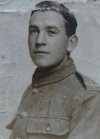
Among his memorabilia are 3
photographs taken when he was serving and the medals that he was awarded; these
were the Victory Medal and the British Medal. In addition the family also has
the medal “presented by the parishioners of Clophill in recognition of services
rendered in the Great War 1914-1919”. There is also a tin given as a gift from
HRH Princess Mary’s Christmas Fund 1914. This contained a packet of cigarettes
and a packet of tobacco along with a card wishing a Happy Christmas and a
Victorious New Year. There were 426,000 of these tins. We wonder how many, like
this one, still contain the cigarettes and tobacco?
Alfred lived in Clophill for
the remainder of his life, marrying Frances Mary Cook in 1929. He was Church
Warden at St. Mary’s Church, Clophill for 40 years. He died in 1987.
Percy Jeffrey was a Private in the East Surrey Regiment. He joined
in June 1918 and in October of that year was drafted to France. He fought at
Cambrai and Ypres and he was present at the entry to Ypres at dawn on
Armistice Day. He was demobilised in August 1919 and he received the
General Service and Victory Medals. In the 1911 census he was 11 years old and
at school. He lived with his parents William and Mary on the High Street along
with his brother Alfred William (see earlier) and his 2 sisters Florence and
Gladys.
William Jeffrey was a Private in the Labour Corps. He was 39 years
old at the time of the 1911 census and was an Agricultural Labourer. He
volunteered in February 1915 and served on important agricultural duties. He
was not transferred overseas and was demobilised in January 1919 after 4 years’
service. Because of William’s age he may not have been considered for “active”
service but, nonetheless, he served his country for 4 years.
Ernest Johnson was a Sapper with the Royal Engineers Inland Water
Transport. He enlisted in 1914 and was demobbed in 1919. He lived in Back
street with his wife Elizabeth (they married in 1907 in Bedford, where they had
previously lived) and their 4 children. Ampthill News reported in February 1918
he was “home on leave from France.” Also in 1918 he had had an accident when a
ladder broke and he fell in a dockyard, head first onto a plank placed between
a barge and the dock. He was a machinist.
Henry Jones lived in Mill Lane and was a Private in the 2nd
Gar. Battalion of the Northumberland Fusiliers. No further information is
available for this person.
James Sydney Jones was a Corporal in the Royal Army Medical Corps. He was
mobilised at the outbreak of activities and in July 1915 was drafted to the
Dardenelles and he took part in the landing at Suvla Bay and the engagements
that followed. After the evacuation of the Peninsula he was drafted to France,
where he fought in many battles, notably Ypres, the Some and Cambrai. He was
twice wounded. He was awarded the 1914-15 Star and the General Service and
Victory Medals. After the War his address is given as “The Rising Sun”, High
Street, Clophill.
John lived in The Strand from at least 1918-1921.
He served as a Stoker on HMS Laurel a British Destroyer.
HMS Laurel served with the 3rd Destroyer Flotilla on completion and transferred to escort duties after 1917.
She was also involved in the Battle of Jutland in 1916, rescuing 18 of HMS Queen Mary’s survivors.
John joined the ship in 1917 having previously served on HMS Forward, Weymouth and Dido.
John was born in Battersea in 1893 and worked as a farm labourer between stints in the navy from 1912-13 and 1916-19.
He married Minnie Lambert in 1916 and moved to Toronto, Canada in 1921 where he died in 1958.
John Kedge lived at 22 The Slade; he was a Gardener’s labourer
and in 1911 lived with his wife, Mary, their 2 sons, and his Grandson. He was
born in Clophill about 1860. He was 5ft 7inches tall. From 1879 to 1888 he was
not a stranger to Bedford Courts, (8 offences) starting with infringement of
Game Laws, sentenced to 1 month hard labour or a fine of 32 shillings and
sixpence; to Drunkenness and Trespass where he was sentenced to '14 days hard labour or 24s 6p and 1 month
or 43s. He seems to have paid the fines. He served as a Private in the
43rd Protection Company of the Royal defence Corps. He died in 1930, aged 70.
Alan Ord Laurie was born in Birkenhead in 1884. At the time of the 1911 census he was living with
his widowed mother- Elizabeth still in Birkenhead. Later in 1911 he married Jessie
Stevenson. He was sent to France in 1915, serving as a Lieutenant with the
King’s Liverpool regiment and then the Royal Engineers. After the war they
lived in London and then Kent, where Alan died in 1960. His address appears as
Back Street, Clophill on the Absent Voter’s list in 1918 but otherwise his
connection to the village is unknown.
Ernest William Lincoln was born in Clophill on 20th July 1885. His son Ernest Albert George Lincoln was killed in WWII and his name is on the Clophill war memorial. He lived on the High Street until about 1908 when he married Ada Crates in Camberwell. They had 4 children, Elsie, Florence, Ernest and Frederick. He worked as a Gas Works stoker.
He enlisted in Deptford in 1915 and was posted overseas in 1916. He served at the Somme. He was injured in 1916, breaking his Tibia & Fibia. He spent nearly 9 months in Hospital in Manchester, needing surgery. He was discharged in 1917 and returned to Clophill. He played the organ in the church and worked as a pump attendant at the Waterworks.
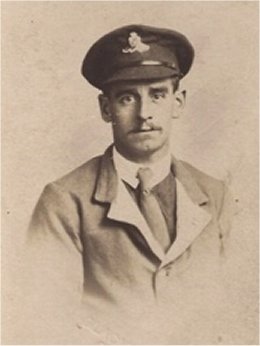
He served with the 137th
Heavy Battery, Royal Garrison Artillery. The Heavy Batteries were equipped with very large guns.
The usual armaments were 60 pounder (5”) guns, although some had
obsolescent 5“ howitzers. As British artillery tactics developed, the Heavy
Batteries were most often employed in destroying or neutralizing the enemy
artillery, as well as putting destructive fire down on strongpoints, stores,
roads and railways behind enemy lines. Upon discharge he was described as “sober, steady
& well behaved.” He died in 1972.
Many thanks to Laura Sharp for the
information and photograph supplied relating to her Great Grandfather.
Charles Lomas was born in Haynes in 1886.
He was brother to Joseph Lomas, who is commemorated on our memorial and Jack below.
In 1911 Charles lived in Back Street with his parents William and Sarah (nee Smith, born in Haynes.)
His parents had had 13 children, 11 of whom had survived.
His 10 siblings still lived at home.
He worked as a Farm Labourer.
Charles served with the Bedfordshire Yeomanry.
Nothing further is known about Charles.
Jack Lomas was born in Haynes and was the brother of Joseph Lomas,
who is commemorated on our memorial. He lived with his wife, Florence, and
daughter, Miriam, in Back Street when he joined the 5th Bedfordshire
Regiment in May 1911. Jack signed up for 4 years at the age of 23 years and 2
months. He was a labourer for Lord Lucas. He was stationed in England until
July 1915, when he travelled on the “Braemar Castle” from Devenport to
Alexandria. He suffered a gunshot wound to his legs in August 1915 and spent 5
weeks in hospital in Cairo. He returned to duty in Egypt and returned to
England in April 1916, being discharged in May after 5 years service. Jack was
awarded the 1914/15 Star and the British War Medal and Victory Medal.
Frank Lowe lived on Great Lane and was a Corporal in Army
Veterinary Corps. Nothing further is known about Frank.

He lived at Brickwall Farm, with his parents John and Maria and his siblings, one of whom, John George is listed on our village memorial. Arthur was born on 15th December 1898 and joined the Machine Gun Corps in 1917, he was a Private. In 1917 his enlistment papers show his occupation as Engineer’s apprentice, he was just 18.
In 1918 he was punished for overstaying his leave in Clophill by 14 hours. He was demobbed in 1919. He returned to live at Brickwall Farm but travelled extensively between the two wars, and lived for some time in Singapore.
Arthur married Joan Wallace in 1934 in Dorset. Arthur also served
in WW2 and was a 2nd Lieutenant, sadly it is believed that he was a prisoner of
war in Singapore for many years. In June 1947 he gained
a Private Pilot’s licence (see 1947 photo) in an Auster at Cowes Aero Club, his
address at that time was c/o Wilmington Lodge, Ampthill. His occupation is
given as a Planter, which was his occupation when he lived in Singapore. He died in East Sussex in
1992.
Rev. Cecil Lloyd Matthews lived in the Rectory and was a Senior Chaplain to the
Forces. He was awarded the Star. He was born in 1881, educated at Oxford and
eventually became Archdeacon of Leicester. He married Ennis Beddoe. He died in
1962. See the full story here.
He lived in 15 Back Street.
He was a hat blocker 1911 when he lived with his sister and parents, Levi and Charlotte (nee Gudgin).
He was one of their 10 children, 8 of whom had survived.
He served with the Bedfordshire Yeomanry who were absorbed into the 5th (Royal Irish) Lancers in 1917, when, along with the rest of 3rd Cavalry Brigade the 5th Lancers fought in such actions as Gillemont Farm and Bourlon Wood.
Towards the end of 1917 they fought at Cambrai.
In 1918 when the Germans launched their Spring Offensive the 5th Lancers were heavily involved in the defense of the British line at the Crozat Canal and at the Canal du Nord where they suffered their heaviest casualties of the war in face of the massive German onslaught.
On 11th November 1918 the regiment, along with the Canadian 3rd Division entered Mons and earned for itself the honour of being the first British regiment to enter the town from which they had been the last regiment to leave in August 1914.
He married Dorothy Everitt in 1916 and by 1939 they were living in 16 Back Street with their two daughters who worked as milliners.
At this time Harold was a Market Gardener’s labourer. He died in Poole in 1971
Sidney Matthews lived on the High Street and was a Private in the
Army Pay Corps. He was born in Clophill
in 1891 and in 1911 lived at “Cross Tree” (now No.87) High Street, Clophill
with his parents, Thomas & Emily and his 4 siblings. He worked from home as
an agent for the Refuge Assurance company. His father was a thatcher. He
married Mary Martin in 1912.
Francis Eden Meade was a Captain in the Royal Engineers (Signals) and lived on Back Street in 1918.
He had been born in Richmond in 1886, married Muriel Lines in 1909 when he worked as an Electrical Engineer.
He died in 1969. His connection to the village appears to have been brief.
Arthur Middleton lived on Back Street and was a Private in the 4th
Bedfordshires. Arthur was the son of Martha and Joseph (a Coal Merchant,) born
in Clophill in 1896. In 1911 his parents had moved to Ampthill and Arthur was
living with and assisting in his Grandfather – Isaac Woodcraft’s business of
Market Gardner in Back Street. Arthur married Mabel Emerton and had 2 children.
He died in Canada in 1951.
Ernest Trevor Mitchell born in 1879. He lived on the High Street and served as Engine Room Artificer in the Royal Navy on H.M.S. Boadicea, a scout cruiser converted to a minelayer in 1917.
In 1921 Ernest was stationed at Chatham Barracks.
He married Bertha Fennemore locally in 1920.
By 1924 they had moved to Pulloxhill.
He worked as a butcher’s salesman in 1939 and then lived with his wife and son in Lambeth.
He died in Middlesex in 1962.

Henry (also known as Harry) was born in 1897 in Flitton. In the 1911 census he was shown as living in Back Street, Clophill as a scholar with his aunt, Charlotte Mary Willmore, a widow and also her son Ernest John, an agricultural labourer.
He joined the Royal Artillery on 26.10.15 and gave his age as 19 years and 3 months (he was 1 year younger).
He was 5’ 4” tall. By that time he was living with his now married mother in Clitheroe and joined up in Preston.
Harry was a driver and gunner serving in France.
He was hospitalised while in the army with tonsillitis and de-mobbed in 1920.
He married Ada Chambers in 1924, both worked in the Cotton Mills. Harry died in Lancashire on the 4th April 1993 aged 95.
Edward Norris was a Private in the Army Service Corps and lived on
the High Street from at least 1918 to 1923. It is thought that he was born in
1877 in Marylebone and later married Mary. However, he was an unmarried shop
porter, living in Paddington when he enlisted in 1915 (and only 4’ 11”). He was
demobbed in 1919. His mother was called Louisa Amelia.
Percy James Northwood was born in Clophill in 1896 and was the son of James and Eliza.
In 1911 their address was given as The Strand and Percy worked, at the age of 15 as a Farm Labourer.
He was a Private in the 3rd Bedfordshire Regiment and the Hertfordshire Regiment. He joined in March 1916 and in the following December was drafted to France.
He took part in the Battles of Attas, Ypres III, Passchendale and Cambrai. He was wounded in the Retreat of 1918. He was later gassed and returned to England, being demobilised in August 1919.
His service record isn’t without blemish, he was admonished and fined 3 days pay for breaking out of camp and going AWOL for over 8 days. He married Emily Fossey locally in 1923.
His address continued to be given as The Strand until 1929 when it became 29 Mill Lane, an address he lived at until his death in 1953.
Ernest James Osborn was born in Clophill in 1881.
He was the son of James and Charlotte Osborn and lived most of his life in what was known as Hope Cottages now 11-13 Little Lane.
In 1895 he bore witness at the trial of W Gaylor who stole 5 bushels of potatoes! It seems that by 1911 he was orphaned and lived with his sister Clara and brother William in what was then No. 11.
Ernest was an agricultural labourer, but his army particulars state that he was a qualified cook and that he had served 10 years previously with the Bedfordshire regiment.
He enlisted in 1916 with the Bedfordshire Regiment and then later transferred to the 8th Leicestershire Regiment and was posted to France almost immediately.
In 1917 he suffered with shellshock and later trench fever.
Later in the year while serving at Etaples he suffered with myalgia.
In 1918 he was transferred to the Agricultural Corps.
He was demobbed in 1919. Ernest married Edith Dorothy Cobb in 1938, in Biggleswade.
Perhaps shaped by the events of 1895 he became a Special Constable by 1939 when he worked as a market gardener’s labourer.
He died in 1955. Both Edith and Ernest are buried at the Old Church.
It is believed that Samuel was born in Clophill in
1884, the son of Samuel and Hannah. The family lived in 6 Bedford Cottages,
Jacques Lane. Samuel was a farm labourer. He married Mary Line in 1906. They
lived in East End, Flitwick by 1911. He served with the 3/5th
&/or 8th Bedfordshire Regiment seriously wounded in France in 1916,
hospitalised in Oxford, returning to France in the autumn of that year. In 1917
Samuel was wounded again and went to hospital in Blackpool. Samuel had 5
children, however his son, Sidney Lewis died in Thailand in WW2. By 1939 the
family were living in Flitton and Samuel was working as a Horseman. Samuel died
locally in 1968.
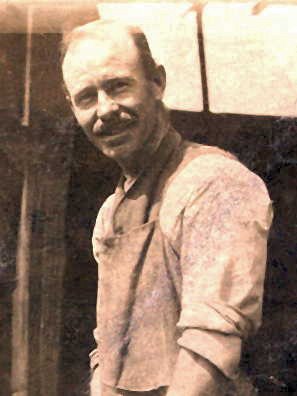
Frederick James Palmer was born in Clophill in 1881 and lived at 33, High Street and was a Private, Motor Transport, A.S.C.
In 1911 he lived with his parents Charles and Mary and was a butcher, as was his father working at the shop at 33 High Street.
He later married Lilian Shotbolt and died in Bedfordshire at the age of 91.
Henry William (Harry) Parkinson was born in Clophill in 1898, by 1911 he was living with his parents, William and Martha, on the High Street, one of 7 children and at the age of 13 working as a farm labourer.
Harry left for France with the Bedfordshire Regiment in February 1916. He was wounded in the shoulder and head at the Somme in 1917 and was hospitalised in France.
He took part in the Trones Wood struggle and was fighting when Thiepval was captured.
He was discharged as unfit on medical grounds, the fourth from our village to be so afflicted. However, by 1939 his occupation is still a labourer when he was still living with his parents in 82, High Street.
It is thought that he died in Biggleswade Hospital in 1984.
Arthur Sydney Peat – (known as Sydney) was born in 1900, he had brown hair and blue eyes.
In 1911 lived at 12 High Street with his parents – David and Ellen. When he signed up in 1917, aged just 17, he was a Market Garden labourer.
He served as a Signaller on HMS Benbow (an Iron Duke- Class Battleship) and also served on the Calypso, Ganges and Victory.
HMS Calypso was a light cruiser on which he was in action against the “Bolshevik” Naval Forces off Reval in December 1918.
The Fleet captured 2 destroyers in this action but Sydney was wounded and invalided out of the navy in July 1919.
He married Nellie Bunker in 1921 and had at least 3 children.
By 1939 he worked as a cabinetmaker and carpenter and the family lived in “D” Shefford Road. He died locally in 1964.
William David Peat, brother of Arthur Sydney (see above) was born in Haynes in 1891.
By 1911 he was a farm labourer and lived with his parents in the High Street.
He served as Gunner with the Royal Garrison Artillery, enlisting in 1915 but was invalided from France in April 1917 and discharged as unfit in October 1917, thus gaining the Silver badge.
William married Hilda Wilson in Cambridge in 1921 and the couple lived in 8 High Street for most of their married life.
By 1939 William had become a bus conductor. William died in 1965 by which time he was living at 154 Clophill Road, Maulden.
John Francis Peat was a Private in the Irish Rifles.
In 1918 Ampthill News reported that he was in hospital in Cairo.
He was later transferred to the Labour Corps.
John was born in Clophill in 1890, son of Mary & Frank.
In 1911 he lived with his wife, Sarah - nee Bandy (they had married in 1907- John just 18 years old) and 2 children at 1 Free Cottages, Back Street.
He worked as a farm labourer.
The family lived in Back Street until around 1928 and then moved to 17 Shefford Road where John continued to live until his death in 1950.
He is buried at the Old Church.
Arthur Samuel Peck was born in Clophill in 1897, son of Richard and Emmeline. The family lived at 43 High Street. He joined up in 1915, giving his occupation as a horsekeeper- working for Mr Burgoine at Ivy Cottage. His army number was 31518 and he joined the Machine Gun Corps, serving with 101 Company and Right Wing Company. He served in France but had periods of disability with both dysentery and enteritis. He was reported in June 1918 in the “Particulars of Character” as being “very sober, exceptionally reputable, very intelligent and a very good NCO, (he was a corporal) with a good command and control and being tactful in the handling of men”. He was awarded the Military Medal in 1918, aged just 20 for gallantry and devotion to duty during a big German offensive in March of that year. He did have a couple of disciplinary blemishes on his record though, both for being late on parade. He was transferred to the reserves on 8th March 1919 having returned to England in Spring 1918. Arthur married Dora in 1923 and they lived and worked as farmers at Woburn Lodge, New Road, Maulden until returning to 43 High Street in the 1950s. Arthur, father of Jean died in 1918.
Thomas Pegg was a Private in the Agricultural Labour Corps and
lived on the High Street. Joined the Army in May 1915 and was discharged in
November 1918 having served in France. Nothing further is known about Thomas.
Walter F. Penwarden lived on The Green and was a Sergeant in the Signal
Section of the Royal Engineers. He was awarded the Military Medal. Research
indicates that, although he appeared on the missing voters register in 1918 for
Clophill, he may have had little connection with the village. He was born in
about 1887 in Battersea and was living at home there in 1911. He was an
Electrical Light Wireman, which may explain his War occupation.
William Matthew Edmund Perkins lived at Mount Pleasant. He
was a Gunner (Bombardier) in the Royal Garrison Artillery. He was the youngest
son of Mr. & Mrs. H. Perkins and he suffered from Trench Fever, being sent
to Newcastle-upon-Tyne Military Hospital in July 1918. He was born in Clophill
in about 1890 and appears on the 1901 as living in The Slade. In 1911 he is
living (as a boarder) in Lincolnshire and, aged 21, is working as a Signalman
on the Great Northern Railway.
William enlisted in 1915 at Ampthill Park, he served initially with the 7th Bedfordshire Regiment and at the time of his medical discharge in 1919 he was a Private with the Labour Corps Home Service company.
He had suffered with myalgia.
Ampthill News reported in January 1918 that he was returning to the front and in May 1918 that he was in hospital, hoping to be well soon.
He was born in 1884 in Toddington and had lived and worked in Luton in later years as a Straw hat manufacturer.
He had married Eliza Frost in 1907 in Luton.
They lived in the High Street from at least 1914 to 1918.
It is believed that William had a hat factory near the Rising Sun Pub. By 1919 the family had moved to Newmarket.
He died in 1963 in Lincolnshire where he had worked as a hat renovator.
William James Pitts was a Private in the 867 Garrison Guard. He was born
in Clophill in 1878. He lived at 7 Mount Pleasant, Back Street, although in
1911 he was a Greengrocer in Holloway. He married Nellie Matthews and they had
5 children. By 1939 was working as a Market Garden Labourer. He died locally in
1953.
Joseph was a Sapper in the Royal Engineers (Airline Section) who was originally from the Liverpool area.
He volunteered in August 1914 and proceeded overseas the following year.
He served on the front line in many parts of the Western Front and was engaged on important constructional duties.
He was present at the Battles of the Somme, Cambrai, Arras and Ypres.
He was demobilised in March 1919 and received the 1914-15 Star, General Service and Victory medals.
He lived at 11, the Strand, Clophill.
His daughter Doris was born in 1916 and married Jack Pitts, who lived with his family at Mount Pleasant.

Doris said she could remember
he father flying over Clophill in an aeroplane and waving to her. Her father
was based at RAF Henlow. As Joseph had been in the Royal Engineers, this may
have been post-War.
Bertie Rainbow was born in Meppershall in 1889 but by 1911 he was living in Beadlow Cottages, Clophill with his parents Edwin and Louisa and he worked as a farm labourer. Bertie was brother to Ralph – see below. He enlisted with the Beds Yeomanry in 1915. He married Lizzie Millard in 1919 and by 1939 was a smallholder living in Biggleswade. Bertie died in Shefford in 1950.
Ralph Rainbow was born in Meppershall in 1894. In the 1911 Census he is living with his parents, 3 brothers and 1 sister in Beadlow. In 1911 he was a Farm Labourer. and was a Private in the 2/5th Manchester Regiment. He was taken Prisoner of War in May 1918 near Armentieres and was later moved to Germany.He wrote home stating - "I am in the best of health and have nothing whatever to grumble about. It really seems to me like peace time. I am sincerely anxious to receive a letter from you. When you can, kindly send me a good big parcel containing soap, tobacco, and some cake. I am seriously in need of the first mentioned article. Now, mother, be sure and not to worry about me as I am quite all right. My mates, who were taken prisoner with me on that memorable spring morning, wish to be remembered to you. We are having lovely weather here, but I still wish this war was over; but we must keep on smiling. I have sent you two postcards since I have been a prisoner, but have heard nothing from you – Your ever loving son, Ralph."He was able to return home by early December of that year.
Ralph married Ethel Bland in 1923 and they lived later at addresses in Hitchin Road, Clifton. He worked as a general labourer and passed away in September 1963.
Noel was a Lieutenant in the British Red Cross Society as part of the Royal Engineers. He joined the signal corps as a dispatch rider. Noel lived on the High Street according to the Absent Voters List/Electoral Rolls in 1918 & 1919. He was born in Lancashire in 1881. There seems to be no family connection with the village, however his father Rev.Canon Hardwicke Drummond Rawnsly was a writer, social reformer and a founder of the National Trust.
Noel died on the Isle of Capri in 1952.
For more details see http://genealogy.antipole.co.uk/database_public/ps13/ps13_032.html
Chief Officer Rich lived in Glebe cottage, now Taylors Cottage, in the High Street. He was the son of John and Julia, but records have not yet revealed which of their sons he was. He was married and served on HMS Swiftsure – the lead ship of the pre-dreadnaught battleships.
(Alfred) William Richardson – born in 1887 was a Private in the 2nd Bedfordshire Regiment. He enlisted in December 1910. In 1911 he was living in Aldershot Barracks. He had served and been wounded in the Boer War. At the outbreak of WW1 he was sent to the Western front. He was in action at Ypres and Neuve Chapelle and had a gunshot wound to the knee at Festubert in May 1915. He rejoined his unit and took part in engagements including the Battles of Ypres and Vimy Ridge. He was invalided home on account of a wound to the face received at Dickebusch on 21st April 1917. After medical treatment he served at the depot of his Regiment until he was demobilised in March 1919. He was awarded the 1914-15 Star, the General Service Medal and the Victory Medal. He lived in The Strand, Clophill and had previously been employed by local farmer J Madams as a labourer. His parents are noted on his military records as James and Eliza (nee Richardson) Northwood. He was brother of Percy Northwood above.
Alfred Richardson was born in 1894, the son of Alfred and Elizabeth Richardson and lived in Jacques Lane with his family (1901 and 1911 censuses). He and his father both worked as Agricultural Labourers. Later he lived on the High Street and was a Private in the 1st Bedfordshires and also the Machine Gun Corps. He was wounded twice. It is thought that he married Nellie Whinnet and they later lived in Ampthill. Brother of Arthur below.
Arthur Richardson –born in Gravenhurst in 1889 to Alfred and Elizabeth of Jacques Lane. He was married in 1910 to Lillie Tuffnell and by 1911 they lived at Cross Tree (junction of Great Lane) on the High Street. Arthur worked as a horseman on a farm. Ampthill News reported in 1916 that he served in the 8th Bedfords and had gone missing after being posted to France. It states that Mrs Richardson (presumably his wife but possibly his mother formerly resided at Clophill Rectory. The paper later reports that Arthur had been badly wounded in April that year at the Battle of Mons) and had been taken prisoner. He had written to his wife informing her that he was only just able to walk about the ward at Karthausurgasse Hospital, however he was receiving parcels. In 1917 it was reported that he had written to his relative F Page in a “cheerful mood, but his enclosed photograph shows a thin and careworn face.” In May 1918 the paper states that he had escaped but later advises that he was now interned in Holland. He was seriously ill and not out of danger. The paper states that he had written to his wife complaining of his treatment by his captors who had “taken everything from him, even his child’s photograph.” Arthur returned home via Holland in August 1918. It is thought Arthur died in 1921 in Cranfield.
George Richardson Served with the Essex Regiment and was wounded in 1917 and sent to hospital in Cardiff. Nothing further is known about George.
Arthur Roberts was born in Clophill in November 1895 and lived on the High Street with his parents Susan and David and his siblings. In 1911 he was living in St. Albans and worked as a Messenger at a Printers. However, he joined the Royal Navy later that year and first trained on “Impregnable” He served in the Royal Navy Flying Corps as a Wireless Operator on HMS Gloucester during the Great War (among many other ships). He continued to serve with the Royal Navy until he was invalided out in 1944! He was brother to Sydney below.
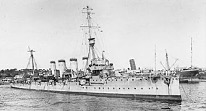
HMS Gloucester was a Town-class light cruiser built for the Royal Navy early 20th century. The ship was initially assigned to the Home Fleet upon. Gloucester was detailed several times during the war to search for German commerce raiders, but her only success was the capture of one supply ship in early 1915. She played a minor role in the Battle of Jutland in mid-1916 and then spent most of the rest of the war in the Adriatic Sea.
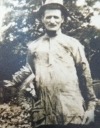
Frederick was the youngest surviving son of Leonard and Ann who lived at Beadlow Lodge. He was born about 1874. He married Mary Broome in 1897 and lived in Fulham in 1901, working as a labourer. Frederick moved to Canada in 1908 and went to France with the Canadian Expeditionary Force in 1915. He was demobbed in 1919 and returned to Canada. Frederick died in 1954 in St Thomas, Elgin, Ontario, Canada. Sadly Frederick’s son, Arthur (born in London), died in France during WW1. It is the first example of father and son serving that we have discovered. Frederick was the first cousin of Cecil, named on our village memorial.
Horace Roberts was born in Clophill in 1890. In 1911 he lived on the High Street with his parents Charles and Louisa, he was a Farm Labourer. He attested in 1915 and served as a Private in the 1st Bedfordshires. He was injured in the ankle in 1917 and badly wounded in the wrist in 1918 and returned from Cambrai to hospital in Nottingham. Horace had a couple of disciplinary issues – in 1917 he overstayed his pass by nearly 3 days and in 1918 was caught drinking in prohibited hours. He was demobbed in 1919. Horace died locally in 1938.
Sydney Roberts was born in Clophill in 1892, he was the son of David and Susan and brother to Arthur above. He joined the Navy in 1909, stating that his trade at that time was a carpenter and starting his service on HMS Ganges a Signals School.
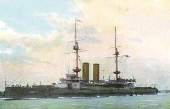
By 1911 he was serving on HMS Duncan with the Mediteranean fleet. He married Florrie Symons in 1915 and was a Chief Seaman. Sydney became shore based on HMS President until he was transferred to the RAF in 1918.
George Gordon Rolfe was born in London in 1883. He married Elizabeth
Collip in 1906 in Wandsworth when he worked as a Coachman. They had 4 children.
In 1918 his address was given as the High Street, Clophill. He was a Driver in
the Royal Field Artillery and wrote home detailing his service. In 1917 he
wrote that he had spent 18 months in the vicinity of Ypres. In April & July
1918 he advised that he was “in the thick of it.” In August ’18 he wrote that
his Battalion was on the Somme and had been involved in a “brilliantly
successful operation,” and that they were constantly under fire. He died in
Maulden in 1958- where they had been living since his return from the war. He
worked as a Builder’s Labourer.
Joshua George Rose was born in Newark,
Notts in 1882. By 1911 he was a teacher living with his parents- George and
Mary Jane at 41 High Street, Clophill. He served as a Corporal in the Royal
Artillery Medical Corps. He continued to be based in Clophill until at least
1919. He married Ethel Evelyn Berwick in 1919. By 1939 they were living in
Herne Bay and he continued to work as a teacher. Joshua died in Bournemouth in
1950.
John Rothwell was a career soldier born in India in 1870, his father was a lieutenant colonel.
He had married Ida Kathleen Clement in 1900 when he was a Captain with the Royal Warwickshires but she divorced him on grounds of adultery and desertion in 1908. He returned from Canada and enlisted for WWI in 1915, aged 45, serving with the Royal Warwickshire and Oxford & Bucks regiments.
His records show he served in the Asiatic theatre of war.
In 1922 he married Margaret Cory Tanqueray-Willaume - she had been widow of fellow survivor Frederick Tanqueray-Willaume who had died in 1919 of pneumonia.
They lived in Oakley House on the High Street. Before their marriage he had lived in Clophill House. He died in 1934.
Frank Rutland was born in Gravenhurst in 1894, his parents were Thomas and Mary. He was a Private in the 23rd Middlesex Regiment. He joined in March 1917 and was drafted overseas the following July. He served on the Western Front and took part in several battles including Passchendale and Dickebusch. He was sent to Italy in February 1918 and after a brief period of service on the Italian Front he returned to France in April 1918. He fought at Kemmel Hill and was gassed in June. He was demobilised in February 1919. Over the years, he and his wife Emily and 3 daughters lived in Back Street, The Strand, and from 1933 to his death in 1945 -23 Mill Lane. Frank worked as an agricultural labourer. He is buried at the Old Church.
Cecil Sharman was born in Clophill in 1897, son of William and Emily. In 1911 he worked as a Farm Labourer and lived at Beadlow. Th Cecil was an Ordinary Seaman, he started his naval service in 1916. He was based on HMS Pembroke, which were shore barracks at Chatham. He served on H.M.S. Titania a submarine depot ship, and H.M.S. Dido and H.M.S. Hecla which were both depot ships. The family had lived in Back Street in previous years.
He was a fireman and described as of good character. He was 5’ 6” tall. He served until 1919. He married Elizabeth (possibly Odell in 1916). By 1939 they were living in Wolverton and Cecil was an Electrical Store Keeper and believed to be brother of James below.
James Sharman was born in Clophill in 1879 and probbaly brother of Cecil above. He had served in the 3rd Bedfordshire Regiment from 1911. He signed up for 4 years, describing himself as married, aged 31, and working for Lord Lucas as a labourer woodman. Lord Lucas of Wrest Park also owned a number of Market Gardens in Clophill.
James was a Corporal during this first period of service but at his own request reverted to the rank of Private in April 1915. He re-enlisted in August 1916 as a member of the 5th Bedfordshire Regiment. He also served in the Dorsetshire Regiment. He gave his address as High Street, Clophill. He served in England until the beginning of 1917 and arrived in France in February 1917, where he fought in many battles including those at Arras, Cambrai and the Somme. He arrived back in England in July 1917 having received “a severe Gun Shot Wound” to the thigh and was invalided out and discharged from the services in November of that year, but spent many months in hospital.
James had married Mary Jane King in Haynes in November 1900 and according to his War Record had 6 children up to the time of his discharge. The family lived at 24 Jacques Lane until his death in 1943.
Walter Sharman was born in Clophill in 1888. He was a Horseman in 1911 and his parents were William & Mary Ann. The family lived in Jacques Lane. He married Mary Webb ( sister to Augustus & Herbert Charles on our memorial) in 1912. Later his occupation was described as “in the employ of the County Surveyor.” He was a Private in the Royal Army Medical Corps. He enlisted in October 1915 and was in France in 1916. He was severely wounded at Thiepval in September 1916 and invalided home for hospital treatment.
Walter was demobilised in March 1919. He returned to live in Jacques Lane with his wife until 1927 when they moved to 119 High Street. His occupation in 1939 was County Council Labourer. Walter died in 1965.
William Sharman lived on the High Street and was a Private in the 1/5th
Bedfordshires. (This entry on the Absent Voter’s List may relate to the soldier
below.)
He was a Private in the 2nd Bedfordshire Regiment. He volunteered as a 15yr old in August 1914 and served with his Battalion in the UK until drafted to Egypt in March 1917. He took part in fighting at Gaza during the British Advance through Palestine. After the Armistice he proceeded to India and in 1920 he was still serving, having volunteered to serve another 4 years in 1919. In that same year Ampthill News reported “ Pte. W. Sharman, 2nd Batt. Beds Regiment, stationed at Colchester visited Clacton Sept. 21st, 1919 and whilst walking on the pier heard a cry for help. Looking over into the sea he saw a boy in difficulties. Having divested himself of his cap, belt and tunic, he dived into the water and brought the boy safely to shore. A collection was made, and Sharman was the recipient of £4 10s. He was formerly a member of the Clophill Troop of Boy Scouts.” His home address later was Jacques Lane, Clophill. Nothing further is certain about this man.
William Sharman was a Private in the 2nd Bedfordshire
Regiment. He volunteered in August 1914 and served with his Battalion in the UK
until drafted to Egypt in March 1917. He took part in fighting at Gaza during
the British Advance through Palestine. After the Armistice he proceeded to India
and in 1920 he was still serving. He was awarded the General Service Medal and
the Victory Medal. His home address was Jacques Lane, Clophill. It is possible
that William was brother to Sydney Sharman who is commemorated on our memorial,
sons of Josiah and Emma.
John Sheppard was born in 1887, one of 11 children born to Market Gardener David and his wife Lucy.
The family lived in the High Street. John married Kate Roberts in 1913 and was called up in 1918 when he had a thriving Market Gardening business and a young family.
His service records state he joined the Machine Gun Corps but Ampthill News states that he joined the Satffordshire Regiment.
John developed Meningitis later in 1918 and was dangerously ill. He recovered slowly and was demobbed in 1919.
His wife died in 1938 and in 1939 John was living in Simpson’s Hill (just to the west of the A6 garage) with his 2 sons and they all worked as agricultural labourers.
John died in 1941 and is buried at the Old Church with his wife.
Ernest Shotbolt was born in 1891 – son of Mary Ann. It is believed that Mary had 8 children.
He was a Private in the 2nd/4th Royal Scots Fusiliers.
He joined in June 1916. After training in the UK he was declared medically unfit and because of ill health invalided out of the service in March 1918
He lived at 4 Barton Cottages, High Street, Clophill in 1911 and was a Farm Labourer.
The head of the household was his Step Father, James Page, a 62 year old Police Pensioner.
James had been married to Ernest’s mother, Mary Ann for 4 years. Ernest had also been married to James’s daughter, Grace for 1 year.
So not only was Ernest James’s Stepson but he was also his son-in-law.
Also residing at the house were Ernest’s brother, Walter (see below), a farm Labourer and James Edward (an infant), the son of Ernest and Grace. Ernest died in 1924
Walter Shotbolt – brother of Ernest above, was born in 1894. He was a farm labourer.
He joined the Grenadier Guards in 1915 and so was awarded the star medal.
He married Ethel Sheppard in London in 1917. At the time of his marriage Walter states that his father is Arthur Shotbolt, (deceased) a veterinary surgeon, however his mother has stated in every Census that she was single.
In his military papers it is stated that he now lives in Ripley, Derbyshire and had been working as a Collier. Ampthill news reported several times on Arthur.
In 1915 “Pte. Shotbolt, of the Coldstream Guards, has written home stating that a shell burst near the trench he was in, and he was buried in the debris.
His ears are affected, and he is at present in hospital at Rouen.”
Then in 1916 that he had written to his brother Ernest, that he has returned to the trenches.
Later in 1916 the paper says no news has been received of Walter, for several weeks. It is believed that he had been a Prisoner of War during 1918.
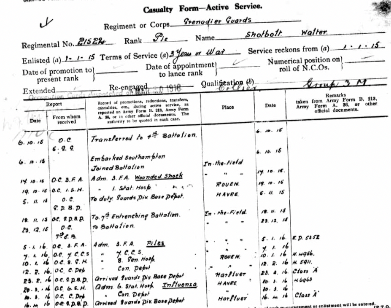
Walter was demobbed in 1920.
By 1939 he and Ethel were living in Wimbledon with their daughter and he was a Police Officer.
He died aged 79 in Merton, London.
A S Simpson was a Corporal in the 1st Queen’s (Royal
Surrey Regiment). He joined in April 1917 and in March 1918 he was despatched
to France. He saw service at Albert and Le Cateau. He was also engaged on
clerical duties with the Royal Army Ordnance Corps at GHQ at Wimereux and
Boulogne. He was demobilised in April 1920 and he received the General Service
Medal and the Victory Medal. He lived at High Street, Clophill.
This is probably Alfred Simpson but nothing further is known for certain.
Frederick Simpson was born in Clophill in 1885.
The family lived on the High Street.
At the age of 15 he was living as a boarder and working as a “sizer” in Rushden. By 1911 he was working as a tailor in Peterborough, living with his future wife Madeline Sharman and her father.
In 1919 Ampthill News reported that he had been home to visit his father (thought to be William Harwood, husband of Sarah née Simpson) and was in billets east of Cologne and was still working as a regimental tailor.
It is believed that he died in 1933 but nothing further is certain.
Frederick George Skipworth lived at “The Gables”, Clophill. He was born in Wokingham in 1870.
He was the son of Grey Skipwith (a baron) and Fanny Elizabeth Tudor.
He was educated at Wellington College, Berkshire.
Frederick married Bertha Sylvia Chapman, an American, in Illinois in 1903.
He fought in the Sudan Campaign in 1898 (the year he also became a Freemason,) and in the Boer War.
He also fought in the First World War, where he was mentioned in dispatches.
He gained the rank of Colonel in the 1st Battalion, Royal Warwickshire Regiment.
At the unveiling of Clophill memorial it was reported that “Colonel Skipworth, C.M.G., who saw considerable active service with the Warwickshires, said that when war was ruthlessly forced upon us by Germany, the men of Clophill, who had previously lived a peaceful country life, went out to fight in the most gigantic and terrible struggle the world had ever known, and to face horrors which those who had not been to the front could not possibly imagine. How they acquitted themselves would stand in history. By their self-sacrifice they were instrumental in removing that menace which had been steadily growing and over-shadowing the peace of Europe, and ever becoming a menace to our very existence as a country. They fought and died as heroes for the glory of old England, and the loyalty of anxious ones at home was a fitting background to the glorious heroism of those fighting in the line. It was the duty of the living to those who were now dead to see that Germany never again attained a position in which she could threaten the peace of the world. It was the duty of the living to those who were now dead to see that Germany never again attained a position in which she could threaten the peace of the world.”
Bertha died in 1944 at which time their address was given as the Corbett Arms Hotel, Merionethshire. He was married again aged 84 to Nora (died 1958), in 1954. He died in 1964 in Hove at age 93, without issue.
Charles Smith was the son of Sarah Ann Lomas (née Smith). He was
born in Haynes in about 1886 and is probably half-brother to Jack Lomas above.
The family lived at Mount Pleasant (now Back Street). Charles enlisted with the
Bedfordshires in 1915 and was a Private in the London Yeomanry. Nothing further
is known about Charles.
Frederick Hargreaves Smith is
thought to have been born in 1869 in Lancashire and had been a Major in the
army at the turn of the century. It is believed he married Elizabeth Hamilton
in 1900 and they went on to have 2 children. By 1915 until at least 1919 his
address was Clophill House, High Street. He was a Major in the Army service
Corps. In later years his occupation was given as “artist.” He died in Jersey
in 1955.
Frederick Thomas Spicer was born 1894 Essendon, Herts, son of Thomas who was son of Hannah and Edward. Frederick and his father were farm labourers which given the lack of social mobility in that era makes his story all the more remarkable. His connection to Clophill is that his grandmother Hannah lived in Little Lane during WW1.
He enlisted, aged 18 in 1912 in the Bedfordshire Regiment. In 1914 alone, he was engaged in the battles of Mons, Le Cateau, the retreat to Paris, the Marne, the Aisne, La Bassee and the First Battle of Ypres. 1915 saw him involved in the Second Battle of Ypres and in the desperate defence of Hill 60 in April and May.
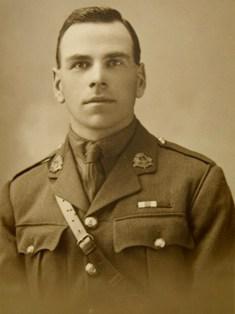
Ampthill News reported in 1915 “Acting Sergt. F. Spicer, 1st Bedfords, who has received the Cross of the Order of St. George from the Czar, is the grandson of Mrs. Spicer, of Little Lane, who was delighted on hearing the news.”
He was also awarded the Military Cross in 1916 at the Somme- his citation reading “For conspicuous gallantry in action. He led his men in the attack with great courage .and determination, himself killing a number of the enemy. He has on many previous occasions done fine work.”
Ampthill News again reported in 1916 “Mr. Frederick Spicer, of the Bedfords, before going to France was promoted Corporal, and soon after was made Sergeant. Last week, he writes to say he had become Sergeant-Major. His aged grandmother (she was 75 at this time!) is delighted at the success of her grandson. Her son-in-law, Sgt.-Major Christian, is at Salonika.”
In 1917 he became a Second Lieutenant, his fighting continued at Ypres and during the German Spring Offensive in 1918. He was mentioned in dispatches twice, was wounded twice and twice gassed! He was also awarded the 1914 star with clasp and roses.
He married Violet Reeve in 1918 but continued his military career, serving in Ireland, India and Palestine. In 1936 he went to Egypt where he served as a Company Commander. Major Spicer returned to France in 1939 serving throughout the phoney war until invalided home. Once recovered he served as a Brigade Major in the Bedfordshire & Hertfordshire Regiment but died suddenly in 1941 aged just 47 by which time he was a Lieutenant Colonel. He is buried in Bury St. Edmunds.
For further details see-
http://bedfordregiment.org.uk/4thbn/4thbtnphotos1.html, or read his war diary which is held in Bedford Records Office.
Arthur Edward Stevens was born in Clophill in about 1882, he lived with his parents-Samuel and Ann in the High Street.
In 1901 he worked as a railway labourer. He married Bertha Pitts in 1909 and in 1911 they lived in Southgate and he worked as an insurance agent.
He served as a Private in the 6th reserve section of the Royal Veterinary Corps.
By 1939 the couple lived in Devon where he worked as a motor fitter.
He died in Devon in 1939.
Reginald Walter Stratton was
born in Kempston in 1876. He married Annie Maud Quenby in Clophill in 1905. In
1911 Reginald was a verger, living with Annie in Bedford. He attested in 1915,
firstly serving with the 3rd Battalion, Northampton Regiment, then the 3rd
Royal Lancaster’s and finally he became a Lance Corporal in the 201 st Labour Corps, Royal Artillery Medical
Corps. He served in Salonica with the Mediterranean Expeditionary Force. He was
demobbed in 1919 and his papers state that at this time he was considered 20%
disabled. His address in the 1920s until about 1935 was Back Street and later
it was given as 12 The Slade and his occupation as Decorator (disabled).
Reginald died locally in 1945.
Cecil Stimpson (or Stimson) was born in 1881 in Clophill, son of Bennet ( a church Sexton)and Sophia, brother to Frank below.
In 1911 Cecil lived with his parents in the High Street, he worked as a market gardener.
Cecil married Hilda Gudgin in 1915 and attested in 1916.
After returning from the war Cecil lived the rest of his life at 1, Jacques Lane whilst working as a smallholder.
He died in 1958 and is buried at the Old Church.
Frank Stimpson (or Stimson) was born in 1888 was younger brother of Cecil above. He married Elsie Claydon in 1913 and by 1915 was serving as a steward in the Merchant navy in Malta. He served aboard the Carisbroke Castle which had been Commandeered two days before the formal declaration of war, she started as a hospital ship with 439 beds, and crossed the English Channel to bring wounded troops home from the Western Front. She shifted roles to that of an Army Troop Ship in the Mediterranean for most of the war.
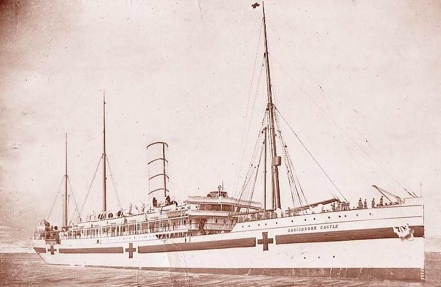
After the war it is believed that Frank worked as a contractor’s wages clerk and lived in Luton. He died in 1965.
David Yeo Bartholomew Tanqueray lived on the High Street and
was a Captain in the King’s Royal Rifles. He was born in Totnes, Devon on 20
Aug 1896 and had one older brother, Andrew and an older sister, Margaret. His
father, Andrew Hawkins Tanqueray was born in Tingrith on 3 Feb 1964. David’s
mother was Alice Lucy Cory. Andrew senior was a brewer in Ampthill and then in
Totnes before becoming the owner of a Mechanical Engineering Company, when the
family lived in Finchley. Although Andrew appears on the 1910 electoral role
for Finchley, none of the family appears on the 1911 Census.
David was posted to France on
20 May 1915 as a 2nd Lieutenant in the 9th Battalion of
the KRR. He was awarded the 1914-15 Star, the British War Medal and the Victory
Medal. On his record his address in 1921 is given as Ivy House, Clophill. Also
on his record are the words “Vologda Force” and NREF. So it is likely that
David served in the North Russian Expeditionary Force, an adventure that was
not a success. At some stage he moved to the Peterborough area and with others
he was involved in the patenting of a laundry ironing machine. He travelled
widely and visited New York twice and Quebec. The manifest on the ships lists
him as a Director and he must have been wealthy in that he travelled First
Class, including on the Queen Mary.
David married Marjorie Edith
Bryant in March 1938, although some records indicate that her surname may have
been McDonald. In 1938 David & Marjorie travelled to Southampton from
Durban on the Windsor Castle. They had 2 children. David was born in 1939 and
Davina in 1941. They were then living at The Old Vicarage, Helpston,
Peterborough. David died at the age of 47 in West End Hospital, Regent’s Park,
London on 21 March 1944.
Frederick George Tanqueray-Willaume was born in 1879 in Kensington, with 3 younger sisters born in India as his father was a Bombay Revenue Surveyor.
Frederick married Violet Holford in 1905, divorcing her on grounds of adultery in 1908, when he served on HMS Britannia whilst serving in the Royal Military Artillery.
In 1911 he lived with his parents in Bedford, his occupation is given as a Captain in the Marine Artillery- a division of the Royal Marines to man the artillery in bomb vessels.
The family of 5 had 3 servants.
Frederick married Margaret Cory Tanqueray in 1913.
They were second cousins.
She was sister of David Yeo Tanqueray who was also a survivor living in Ivy House, High Street.
They shared a great great grandfather whose brother created the worldwide gin empire which originated in Bedfordshire in the 1830.
The Tanqueray family were originally silversmiths in France, but left for England in the 18th century and built a life in Tingrith, Bedfordshire.
Three generations of the family became rectors and built Tanqueray House as their family home, a Grade II listed house that still stands in the village today.
However, in 1830 their great uncle Charles Tanqueray defied family tradition when aged 20 and decided to leave Tingrith for London to establish a distillery, instead of becoming a clergyman.
Frederick died in 1919 in Gosport of pneumonia.
William Harold Thurley was born in Northampton in 1887. In 1911 he
was married to Ethel Guest with one daughter and lived in Sandy. His occupation
was Rural Postman. In the 1918 Absent Voters List his address is given as
Jacques Lane, Clophill. He served as a Private in the 1st Scottish Rifles.
Ethel and William (sometimes known as Harold) had 4 more daughters. In 1938
they were living in Tempsford. He died in 1939.
Frederick William & Alice Titmas of Woodview, (now 51) High Street, saw 3 sons go to war.
All 3 sons were born in Clophill and return to live with their parents until at least 1923.
Known as Ernest, he was born in 1887 and in 1911 was a Gunner for the Royal Navy serving in China and East India.
In WW1 he was a Gunner Royal Marine Artillery, serving on HMS Commonwealth a King Edward V11 class battle ship which was used to supplement the Grand Fleet's cruisers on the Northern Patrol, and HMS Lord Nelson. Nelson was a pre-dreadnaught battle ship with served at Ernest’s time in the Dardanelles.
Ernest was 5’ 10” and
considered to be of good character. He had enlisted in 1903. He married Minnie
Sanders in London in 1926. They continued to live at 51 High St until
approximately 1939 when they moved to Blair Cottage, Mill Lane. Ernest died in
Bedford Hospital in 1959.
Jesse Titmas was born in 1882. In 1911 he was working as an
assistant to his father who was a Dairy Farmer. Jesse was a Private in the
Royal Artillery Medical Corps. He was often reported on in Ampthill News. In
1916 they reported that he was home on leave, suffering greatly from the
effects of gas but that he had been on active duty for 17 months. They also
report that he has lost a brother in law in Gallipoli and that he has another
brother in law and 2 brothers serving. Later they report that he has sprained
an ankle whilst on duty but subsequently returns to convey injured prisoners by
train to Switzerland. In 1917 he served in France, near Etaples.
In 1917 he wrote home:-
“I suppose you
are busy now digging potatoes. We're having pouring rain, but never mind, the
weather will be better soon, and thank God we can say 'All's well'. I
came across Rev. C.L. Matthews the other day, and had a long chat with him. He
wished to be remembered to the parishioners of Clophill. The wounded are most
complimentary in their remarks about him, and everybody appears to like him.
The other day, I was going to see my brother Sam. Our train stopped within five
miles of him overnight, but when I woke in the morning I found I was miles
away. Well, what is your opinion about the war? Do you think we shall win? All
the boys out here are confident of victory, and there opinion is that it is not
far distant. I heard rather an amazing piece the other day from an Australian
Sergeant. His company had just accomplished an excellent piece of business when
his officer came up and says 'Come on boys, let's go back on the
battlefield and kill a few more Fritz's, and understand we spare none, wounded
or not.' Immediately on their return they came across a helpless Fritz in
a shell hole weakly murmuring 'Kamerad'. The officer and sergeant
bandaged the poor fellow up and gave him a drop of brandy. That's a specimen of
the chivalry shown by our lads in France. Well to change the subject, how are
the crops looking? They are excellent out here, but they will have the greatest
difficulty to harvest them owing to the shortage of labour, but then, the
French are exceptionally hard working.”
In 1918 Ampthill News reports
that he has refused promotion and by his own request is returning to his
pre-war battalion of the RGA.
It is believed that Jesse
emigrated to Australia before WW2 and that he died there in 1954.
Sam Titmas was born in 1896. In 1911 Sam was described as an
Apprentice (cycle). Sam joined the Royal Flying Corps on 4th
November 1915 as an Airman 2nd Class. He embarked to France in
December 1916. He received several promotions through Airman 1st
Class, Acting Corporal, Corporal, and then to Sergeant on the 1st of
July 1917. He was transferred to the Royal Air Force in April 1918, the day on
which it was formed. He left the RAF in January 1919 but joined the RAF Reserve
the following month, finally being discharged at the end of April, 1920. His record
shows him as being a Joiner and just over 5ft 11ins. tall. He married May
Wadsworthin 1928. In later life (1939 onwards) they are resident in Westbury
Gardens, Luton. He continued to work as a Carpenter. Sam died in March 1979.
Lewis Carl Tiffin was born in Kent in 1890. By 1911 he was working as a
footman in Ramsgate. There he met Flora Whittamore who had been born in
Clophill and was working as a cook just a few doors away. They married in 1916
and went on to have a daughter called Myrtle. During WW1 Lewis was a Corporal
in the Motor Transport Army Service Corps, giving his address for the Absent
Voter’s list as the High Street, Clophill. After the war the family lived in
Wandsworth, where he worked as a grocery shopkeeper and where he died in 1973.
Bertie Tuffnell was born in
Clophill in 1884. His family kept the Stone Jug from 1876 to 1959. Sadly
Bertie’s father died when he was 4 and so his mother, Mary, takes over as
licensee of the Jug. So in 1891 we find Bertie and one of his sister’s living
with an Aunt on the High Street. It is believed that in 1901 he was living as a
boarder, at the age of 16, in Hendon. He was working as a General Labourer. His
whereabouts are not known until his activities are reported on in Ampthill News.
It states that he was wounded in 1915 whilst serving in General Botha’s Army in
South Africa. In 1916 the paper reports that he “is enjoying the beautiful
breezes in Alexandria” and that he served throughout the Boer War and has since
been in many military engagements under Botha and had been wounded. Later that
year it states that he has again been seriously wounded and is in hospital in
London. He is promoted to Corporal in 1916.
In January 1917 Ampthill News reports “Bert. Tuffnell, South African Infantry, has been discharged
as medically unfit for further service. He was in South Africa at the
commencement of Hostilities, his regiment helped conquer German South West
Africa. Later he served in Egypt, where he was badly wounded in the shoulder.
He has spent a long time in hospital, but has not been able to regain the use
of his arm, and has consequently been invalided.”
Post-war Bertie lived in Back Street and he married Alice Sutton in 1926.
It is thought that he continued working in the licence trade in Surrey and that he died there in 1953.
Bruce Tuffnell was brother to Bertie above.
He was born in Clophill in 1988, a few months before his father’s death.
In 1901 he was living with his brother Frank at the Stone Jug.
By 1911 he was working as a Zookeeper (one of 6) at Ampthill House, now site of the Wingfield Club in Church Street, Ampthill.
His employer, Mr Wingfield, kept a small zoo as was the fashion at the time.
His collection included Llamas , Zebras ,Cheetahs, Ostriches, Camels, Bison, Bulls and Pigs.
All ridden on and very popular with his visitors.
The collection was scaled down in the 1920s and by 1930 most of the animals were transferred to the new Whipsnade Zoo.
Perhaps Frederick is in this photo tending to the needs of an ostrich!
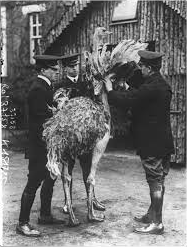
By 1915 Frederick had joined the Bedfordshire Yeomanry and, in that year, married Annie Ansell- a local assistant schoolteacher.
He had just received orders to leave for the front.
After the war, the couple lived in the High Street and by 1930 had taken on the licence of The Stone Jug.
Frederick retired from the pub in 1959 and lived at 51 Readshill at the time of his death in 1961.
Frederick Tysome was born in Meppershall in 1889. By 1911 he was living
in Old Warden and working as a Farm Labourer. His parents were called William
& Ann. Frederick was a serving soldier and was drafted to France in 1914.
He fought in many engagements including Ypres, Festubert, Loos, Givenchy and
the Somme. He was badly gassed and returned to England in 1917 and was
invalided out of the service as a result- being granted the Silver medal as he
was discharged due to sickness. Frederick married Margaret Waddell in St Albans
in 1918 and by 1919 they lived in Little Lane. From at least 1934 until his
death in 1959 the family lived at 14 Bedford Road, Clophill. In 1939 his
occupation is given as War (Disability) Pensioner. It is believed that the
couple had 4 children.
William and Caroline Upton lived in 44 High
Street. They had both been widowed and proceeded to have 2 sons together – they
both served in WW1. William died in 1913.
Henry (Harry) Upton was born in Clophill in 1896. He worked on a farm
(Simpson’s Firs) belonging to a Mr. Williamson in 1911, here he met with a
serious accident ( at the age of 15,) when he was driving a horse which was
working the chaff-cutting machine and Harry’s foot was caught in the
cog-wheels. However, he enlisted with the Bedfords in 1915 by which time he was
5’ 10” tall. He became a Lance Corporal. He was sent to France in 1916, where
he spent the duration of his war. He was hospitalised several times for
Dysentery, Pleurisy and the effects of gas attacks. He approximately 140 days
in hospital over a period of 12months. Unfortunately his relatives had been
advised in 1916 that he had been killed by shellfire but soon after they were
informed that this was not the case. His medical papers also state that he
suffered from Laryngitis and Rheumatism. He was demobbed in 1919 with a pension
for a 5% disability, which related to the after-effects of gas. When he was
demobbed the family were living in St Albans. Nothing further is known about
Harry.
Charles Robert Kimberley Upton was born in 1900. He enlisted
just after his 18th birthday with the Bedfordshire Regiment. He did his training at Brockton Boot Camp
at Cannock Chase. He was A1 fit despite having a scar on his left leg. He was
5’ 5 ½ inches, with grey eyes and auburn hair. He had flu in June that year,
spending 16 days in hosipital. He was demobbed in 1919 after another two weeks
in hospital. He was living in St Albans at the time of enlistment. He married
Daisy Gibbard in 1929 and by 1939 was Head Gardener for the Gorhambury Estate,
St Albans. He died in 1971.
Richard James Warwick was born in Surbiton, Surrey on 21st
April, 1888 and in 1901 lived in Wter End with his father James, a Domestic
Gardener born in Ridgemont, his mother Mary Jane (Brown), who was born in
Middlesex, and 2 sisters. His father died in 1910 and in 1911 he was living in
Back Street with his mother (now a Dressmaker) and his younger brother William
John. There is no mention of sisters although his older sister, who reached
middle age, may have been living elsewhere by then.
His military service is not
easy to follow as the records show that he joined the Royal Navy on 21st
June 1916 and served on HMS President II ( an accounting base) until 31st
March 1918 with the occupation as Chauffeur but he rank of Aircraftman Second
Class, then Aircraftman First Class. From 1st February 1918 he
became Air Mechanic Second Class. On 1st April 1918 he was
transferred to the newly formed Royal Air Force. He was transferred to Reserve
in March of the following year. In 1924 he married Ida Jane Payne and at some
time they lived in Langford. He died in Berkhamstead in 1966.
In 1918 Ampthill News reported that Mechanic W. Warwick, R.A.F., has been home on sick leave after a month in hospital.
He was at work underground when he and his two comrades were buried beneath a fall of earth.
He was the first to be dug out, and the other men were dead when they were disentombed.
Warwick sustained some severe injuries, and was unconscious for a considerable time.
He has fortunately made a good recovery, but his escape from death was a narrow one.
Nothing further is certain about this man.
William Thomas Watkins lived on the High Street and was a Company Sergeant
Major in the Royal Engineers. He was awarded the “Star” in 1915. Nothing
further is known regarding this man.
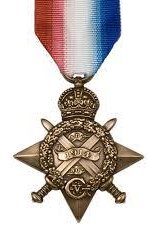
3 brothers Isaac, Arthur and Webb, George provided 8 sons for the war effort. It is thought their cousins provided 5 more.
Isaac and Eliza Webb had 6 sons that served in WW1. The family lived at 11 Jacques Lane.The family were
mostly farm Labourers, although Lewis was a carpenter and Albert a milkman. All
of the sons were born in Clophill.
Albert Webb was born in 1879. He married Florence in 1900 and by
1911 they were living in Ealing. Albert enlisted in 1916 (aged nearly 37yrs)
and served in France with the Army Service Corps ( Motor Transport) as a
Lorry Driver. He was 5’ 5.25” tall and was described as sober, reliable &
intelligent.
Whilst on leave in 1916 he sported a much admired goat skin!
Unfortunately he faced a disciplinary action whilst serving near Cologne
in 1919 as he was “improperly dressed” – he was not wearing a belt! He was
demobbed later that year.
By 1939 Albert and Florence lived in Suffolk, where he worked as a Fish Merchant. He died in Bury St Edmunds in 1956.
Sidney Webb was born in 1886. He was 5’ 6” tall and had blue eyes
with brown hair. He had joined the Kings Royal Rifle Co. in 1903, aged 18. He
spent time with his unit in Bermuda where he suffered with rheumatic fever. His
officers described him as being good, sober and hardworking. He was also a keen
sportsman. Later he became a Sergeant and was sent to France in 1914 and his
exploits were regularly reported in Ampthill News. In 1915 he had written to
say that “as a sniper several Germans had realised the accuracy of his rifle.”
And later that year he informed his parents that he and 5 others from his
company were cut off from their comrades by the enemy, but after 2 days of hot
pursuit and severe privation they had succeeded in re-joining their regiment.
In May he tells his mother that he had had a bullet pass through the collar of
his coat, but it fortunately only grazed his neck, but he is hearty and well.
Later in May he lets his family know he has been slightly wounded in the face
and back by shrapnel. He came home briefly in October 1915 and brought his
blood-stained bayonet with him! In 1916 he is temporarily hospitalised but soon
returns to “sniping.” His term of service expired in 1916 and it is not known
if he re-enlisted. In 1939 he was still working as a Market Gardener’s
Labourer, still living at 11 Jacques Lane with his father. He died locally in
1955.
Ernest Webb was born in 1889. He was a sapper in the Royal
Engineers. After the war he returned to Jacques Lane until 1922.
It is thought he married Mabel Gardner and moved to Rugby where he worked on the railways and that he died in that area in 1971.
William Thomas Webb was born in 1893. He was employed by the Burgoynes in
Maulden. William enlisted in 1915 and was a Private in the 6th
Battalion, Leicestershire Regiment. He served in France- near Etaples where he
suffered a shrapnel wound to his hand in 1917 and later that year a gun shot
wound to his arm and head. William seems to have had time-keeping issues as he
was disciplined for overstaying his leave by 1 day in 1917 and in 1918 he was
absent from parade for 1.5 hours! He was demobilised in 1919. After the war he
returned to Jacques Lane until 1930. It is believed that by 1939 William is
living at 7 The Green, with his wife Kate. He was working as an assistant to a
Waterworks Engineer.
Lewis James Webb was born in 1896. He worked for Lord Lucas (owner of
Wrest Park) and was a keen sportsman. Lewis enlisted with the Bedfordshire
Regiment in 1911, where his age was given as 17. He became a Private in the
Loyal N. Lancs.
His character was described as “steady and reliable.”
He returned from the war to live at Jacques Lane until 1922.
Nothing further is known about Lewis.
Percy Cyril Webb was born in 1898. Percy was a Fitter in the Royal
Field Artillery. When he returned from the war he lived with his father and
brothers in Jacques Lane until 1925.
He married Ivy Woodland and worked at Vauxhall Motors.
Percy died in 1983.
Their brother George saw his son also named George survive the war.
George jnr. was born to Ann in Clophill in 1878.
His father died in 1884.
In 1891 he lived with his mother and stepfather in Cricklewood.
He enlisted as a driver for 12 years in the Royal Artillery in 1899 and in 1901 he was living in Barracks in Leeds.
His occupation at the time of enlistment was given as a labourer.
His height 5’ 5” and his eyes brown.
His character was described as good.
George married Emily Fellowes in 1905. Sadly, the couple lost a daughter in infancy and a son aged just 8 yrs, they had 2 other children who survived to adulthood. By 1911 the family had moved to Yorkshire where George worked as a coalminer. It is not clear what role George played in WW1 but it is likely he served in view of his previous service. 1939 they still lived in Yorkshire and George worked as a driver on a farm.
George died in Wimbledon in 1950.
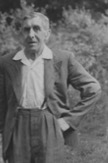
Alfred Webb gave his address as Beadlow for the Absent Voter’s
Register, however his family connection cannot be proven. He may have been a
son of Henry & Sarah Webb who lived at Beadlow and lost two sons, Augustus
and Herbert in the Greta War. Alfred was a Private, Motor Transport., Aux.
Patrol Co., Army Service Corps.
Bertie John Webb was born in 1894 in Clophill. In 1911 he worked as a
gardener. His parents were William & Ann and the family lived in the
High Street. He was a Driver with Royal Army Service Corps (Motor
Transport) and he volunteered in June 1915, being transferred overseas the
following month. While on the Western Front he undertook transport duties in
the Loos, Arras, Cambrai and Somme sectors. He received the 1914-15 Star and
the General Service Medal and the Victory Medal.
The military records for the end of the War give his address as The Nook, (now 2 Mill Lane) – the same address as Len Izzard.
Bertie was a first cousin of Frank & Walter below.
It is thought that he married Sarah Jane Tunn in 1918 and that the couple emigrated to Australia in 1921 where he died in the 1960s.
It is possible that Bertie’s brother – Walter Fredrick died in Palestine in 1917.
The records seem a little confused as they have been amended to a different regimental number – 210419 and 201419, the correction shows the mother as a widow named Ada, and his birth place as London however Bertie’s and Walter’s father was still alive at this time.
The original record shows Walter as living in Lilley at the time of his supposed death, having been born in Clophill in 1891.
There is a W F Webb on Lilley’s `war Memorial. In 1911 “our” Walter lived as a boarder near Tunbridge Wells and worked as a gardener.
Levi Walter Webb (known as Walter) was born in 1884.
In 1901 he was working on a farm in Ripley, Derbyshire, but by 1911 he had returned to Clophill.
He enlisted in 1915 and was a Gunner in Railway Construction Troops Depot in the Royal Engineers.
He served in Mesopotamia in 1916 and Salonica in 1917.
Walter lived in The Nook – now 2 Mill Lane with Violet (neé Sutton) his wife, after the war the family moved to Clayhill Cottages, Maulden, where in 1939 Walter was a Forestry worker.
He died in 1956.
Levi and Sarah Webb had two sons who served and survived.
Both sons were born in Clophill.
The family lived in 81 High Street Clophill.
Frank Webb was born in 1894. He enlisted with the Bedfords and
was then connected to the 7th Royal Fusiliers Intelligence Dept. He
served on the Somme and by 1917 had served for 2 years in France. In 1918 he
was gassed at Armentiers. Later that year he was “back in the thick of it.” It
was reported in November 1918 that “on one occasion he had just dressed 2
wounded comrades, and was rendering other assistance when a shell burst close
to them and killed them both, leaving him unhurt.”
Frank married Ivy Odell in 1922
and by 1939 they were living in Ampthill and he was working as a Public Works Contractor.
It is believed that he died in Biggleswade in 1973.
Walter Webb was born in 1884. In 1901 he was working on a farm in
Ripley, Derbyshire, but by 1911 he had returned to Clophill. He enlisted in
1915 and was a Gunner in Railway Construction Troops Depot in the Royal
Engineers. He served in Mesopotamia in 1916 and Salonica in 1917. Nothing else
is certain about Walter – it is probable that it is the same Walter that lived
In The Nook – now 2 Mill Lane with Violet (possibly his wife,) after the war
until they moved to 16 Bedford Road.
William Webb lived on the High Street and was a Private in the 692 Agricultural Company, Labour Corps.
It is probable that William is the brother of Bertie John above and was born in 1879 in Clophill.
By 1901 he was working as a Groom in Uckfield and in 1911 as a Gardener in Welwyn.
It is believed he married Jeanie Rae Hope in 1915 and by 1939 was living in Luton with his family, working as a Floor Cleaner.
It is thought that William died in 1958.
William West was born in Clifton
in 1892 and by the age of 14 was working as a farm labourer. He married Ethel
Emily Sharman in 1915 and it is thought that they had at least 2 children.
William enlisted in 1916, he served with the Bedford’s, the Middlesex Regiment
and with the 9th Battalion East Surrey regiment. He was quickly sent overseas
but received a gun shot wound to the face in June 1917 and was wounded again in
September that year in the right arm and chest. He resumed his duties and
served in the field throughout 1918. He was demobbed in 1920. It was noted that
he had 3 disciplinary issues; he made an unauthorised alteration to his
clothing; he was absent from the Tattoo; and he left a working party without
permission. His address through the 1920s was given as 96/Auckland Cottages,
High Street, Clophill. In 1939 his occupation is given as Builder’s Labourer
and his address as Shefford Road, Clophill. It is believed that he died locally
in 1980.
William George Whittamore was born in Clophill
in 1888 and the family lived on Silsoe Road, later on the High Street. His
father, James, was a Carpenter. His mother was called Ann. (He was often
referred to as “George” rather than William. He enlisted in Coldstream in 1914
in the King’s Own Scottish Borderers. At the time his occupation was as a
gardener. He was 5’ 3.5”. He was posted to France in February 1915 having been
promoted to the rank of Lance Corporal. He received a severe shrapnel wound the
following month and returned to England until November 1915, when as a Corporal
he returned to France. He had been a patient in Leicester Hospital. He remained
in France until February 1918, being promoted to Sergeant in January 1916. He
received a commission in February 1918 and left the Army later that year as a 2nd
Lieutenant, having been awarded the Military Medal. At the time of his
commission he had been transferred to the Machine Gun Corps. In 1919 it is
believed he married Hilda Wrench locally. They went on to live in the Hampstead
area and later Reigate. William died in Old Windsor in 1975.
Hubert Whittamore lived on the High Street and was a Private in the 9th
Cheshire Regiment per the Absent Voters Register. He was born on 14th
February, 1885 in Clophill and in 1901 lived in Silsoe Road with his prents and
siblings. In 1911 he was an Apprentice Carpenter (his father was a Carpenter).
William George (above) was one of his older brothers. He joined up in November
1915 as a mechanic (carpenter) in the Royal Flying Corps but later he was a
sapper in the East Africa Royal Engineers, spending some time in East Africa.
Later, he was transferred to the Cheshire Regiment and served in France. In
1939 he was living at 123 Clophill Road, Maulden with his wife, Lilian, and
their daughter, Daphne (later Goodhall). Hubert died in 1960.
Fredrick Willison was a Private in the 4th Bedfordshire
Regiment. He volunteered in November 1915 and was drafted to the Western Front
the following July. He fought in various engagements including Ypres, the
Somme, Beaumont-Hamel and the Retreat and Advance of 1918. He was wounded 3
times. He was demobilised in March 1919 and he was awarded the General Service
Medal and the Victory Medal. He lived in Jacques Lane, Clophill.
Ernest John Willmore was born on 13th March 1884. In 1891 he was living in
Back Street with his father, George, a carter, and his mother, Charlotte
(Lammas), a Straw Plaiter. In the 1901 census Ernest is described as a
Gardener’s Labourer, while his father is now a Sheep Shearer. George died in
1909 and in 1911 Ernest was a Farm Labourer living with his widowed mother and
a male cousin.
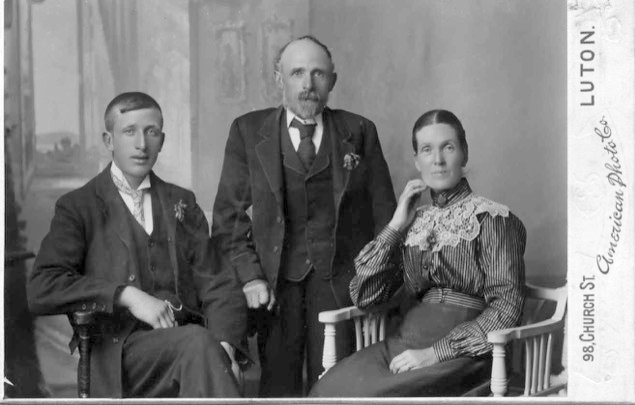
He enlisted in 1916, aged nearly 32. He was 5” 8.5” tall.
He moved between the Middlesex Regiment, the Labour Corps and the 29th Battalion of the London Regiment.
He left the Army in 1919.
Ernest married Gertrude Ethel Swindon in Market Harborough on 9th June 1919.
They appear to have then lived In Clophill and they had 3 sons and 4 daughters.
Ernest died on 8th September, 1965, when he was living in Readshill.
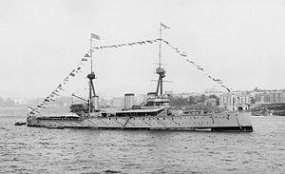
He served on H.M.S. “Inflexible”, joining up in 1912 and was sent to the North Sea at the outbreak of war. The ship was then sent to the Dardenelles and he was awarded the Distinguished Service Medal for his conspicuous gallantry in bringing back a picket boat single-handed. He was wounded 3 times while with his ship.
After the evacuation of
Gallipoli he returned aboard his ship to the North Sea. He served until July
1919, when he was demobilised. As well as the DSM he was awarded the 1914-15
Star and the General Service Medal and the Victory Medal. He lived in Jacques
Lane, Clophill. Nothing further is known about this man.
Horace Ensor Wootton was born in Clophill in 1885. He was the Grandson of
James Wootton, the Postmaster/Sub-postmaster of Clophill. We don’t know which
of James’s children was Horace’s parent –possibly his father was Frederick
James Wootton. Ampthill News recorded that Horace wrote regularly to his sister
at the Post Office. Horace was living in Queen Square, Holborn, in 1901 and was
a boarder working as an “Errand Boy - Port”.
Horace appears in the 1911 Census as a Lance Corporal in the Second Hampshire Regiment.
At the time of the Census, the Regiment was based in South Africa. His army career
varied across the 1st, 2nd and 3rd Regiments. By 1914 he was a Sergeant and
later Warrant Officer 2nd Class. He was in France from the early days of the
War. In June 1916 he was temporarily incapacitated because of foot problems. He
was home on leave in December of that year. In April 1917 he was badly injured
by “barbed wire entanglements”. In June 1917 he was in hospital in France
suffering from Trench Fever. At that time he was a Quartermaster Sergeant. By
August he had returned to the front. He had been awarded the Distinguished
Conduct Medal in 1915 for conspicuous bravery on the battlefield. He was home
on leave in November 1917. In May 1918 he was promoted to Company Sergeant
Major. He had been recommended for a Commission but had declined it. From 1918
until at least 1924 he is a resident in High Street, Clophill. On 16th
August 1919 there was a “Peace Fete” in the village. The participating soldiers
were commanded by Horace.
Horace seems to have been something of a traveller. In April 1924, Horace, his wife,
Rose, son Peter (aged 2), and daughter Patricia Rose (aged 1) arrive in London
from Singapore on the “Karmala”. It is stated in the ship’s record that they
intend to return to “British Possessions”.
In May 1932, Horace, Rose and Patricia arrived at Southampton aboard “Sibajak”
from Malaya. Their address was given as 46, (Wootton House) High Street,
Clophill.
In October 1945, Horace and Rose arrived in Liverpool from Singapore aboard “SS
Nieuw Holland” and their address is given as “Central Stores”, High Street,
Clophill. Horace gives his occupation as Club Manager. With them is Oliver
William Wootton, an Accountant. Oliver is 51, 9 years younger than Horace. Possibly
they may have been in Singapore during the Second World War. Again, Horace and
Rose have advised that they intend to return to the British Empire, not stay in
Britain.
Horace and Rose were living at that address in 1946. Horace on his own arrives from
Malaya at Southampton on board another ship in July, 1947. Subsequent Electoral
Rolls show Horace and Rose as living in High Street, Clophill. Sometimes
there’s reference to Linden C Wootton living either next door or at the same
address.
Horace died on 10th March 1957 and his address is given as 46, High Street
Frank Reginald Young was the brother of E W
Young who is commemorated on our memorial. He was born in 1895- Clophill and in
1911 lived in Hall End with his widowed mother – Hannah. His father was William,
also a butcher.Frank worked as
a butcher in the family business, until after asking the doubtful Medical
Officer to allow him to enlist, he served as a trooper with the mounted section
of the Bedfordshire Yeomanry . He went on
to marry Winifred Garton in 1924 and the family lived at 17 High Street (now
the site of entrance to Cainhoe Road.) The couple had a son called Robert and
Frank continued to work as a Butcher. He was a Police Sergeant in Clophill
during WW2. He died in 1984, having moved to 26A High Street.
George and Elizabeth Young had four sons who served. George was the brother of
William above. They had also lost one son in infancy and then lost Sydney
William who is commemorated on our memorial. In 1911 the family lived in 9 The
Strand:-
Arthur Charles Young >was born in Clophill in 1886. Arthur lost his first
wife in 1917. He was in the merchant service and then served with the Royal
Navy Brigade in Malta and the Dardanelles. Ampthill News described him as a
“gallant naval man and hero of Gallipoli.” He was hospitalised in Glasgow in February
of that year and underwent several operations.He married Annie Dolan in 1928. They worked as servants at Tempsford
Hall and by 1939 were working as Butler and Cook at Stonebridge House,
Biggleswade. Arthur died in Clapham in 1968.
Edward George Young was born in 1887. He was Corporal in the
Bedfordshire Yeomanry and became a Trooper in the City of London Yeomanry. He
was on active service in France in 1917. Later he was seriously injured when a
horse kicked him. He was taken to hospital in Warrington. Nothing is known
about his later life.
Hubert Young was born in 1892, he had lived on the High Street and
by 1911 was an Apprentice Butcher living as a boarder in Dunstable. He enlisted
in 1915 and was demobbed in 1919. He was a Private, Mechanical Transport Army
Service Corps. By 1931 he had emigrated to the US, and was living in
Clarkstown, New York State with his wife- Ethel (née Reeves)- whom he married
that year. By 1935 he was working as a farmer. He died in Indian Lake, New
York, US in 1966.
