Licensed Premises
Up until 1959 Clophill had six public houses for a population of about 1000.
They were the Flying Horse, the Green Man, the Compasses, the New Inn, the Rising Sun and the Stone Jug.
It is difficult to find a reason for the large number.
Clophill was always an agricultural community.
There was some passing trade on the A6 but apart from that there is no obvious reason why the village supported so many licensed premises.
Licensing
From 1522, a person wanting to sell alcoholic drinks had to apply for a licence from the Quarter or Petty Sessions. From 1617 licences were required for those running inns and in 1828 a new Alehouses Act followed by the Beerhouse Act of 1830 overhauled the system creating looser regulations for those applying for a licence which resulted in a significant rise in the numbers of licensed premises selling alcohol. As a result, drinking in pubs became increasingly popular in the 19th century.
Beerhouses, Taverns and Inns
Originally beerhouses and alehouses only sold ale or beer whilst taverns sold additional beverages such as wine and spirits. Inns and especially coaching inns were bigger establishments offering larger more comfortable rooms and accommodation.
Tied houses
From the 17th century breweries often bought pubs and tied them into only selling their beer. Eventually around 90 per cent of pubs were tied to one brewery.
The Flying Horse Public House
The earliest mention in the records of this inn is in the will of Joseph Hill, the late owner in 1731. Its position at the crossing of the north-south and east-west roads meant that it probably developed as a coaching inn. As late as 1927 it still had "stables for 5 used (for) bikes etc., stables for seven used (for) bikes etc., stable for 6 used (for) car, two loose boxes used (for) stores." as recorded in the 1925 Rating Valuation. So there was plenty of room to stable the horses of passing travellers. At the same time it is recorded that the National Omnibus & Transport Co. Ltd. had a "garage for three buses" in the adjacent yard and that the pub "Gets charabanc parties. Best pub in village." The inn remained in Morris ownership until the company (then Morris & Company (Ampthill) Limited) was sold to Luton brewers J.W.Green Limited in 1927.
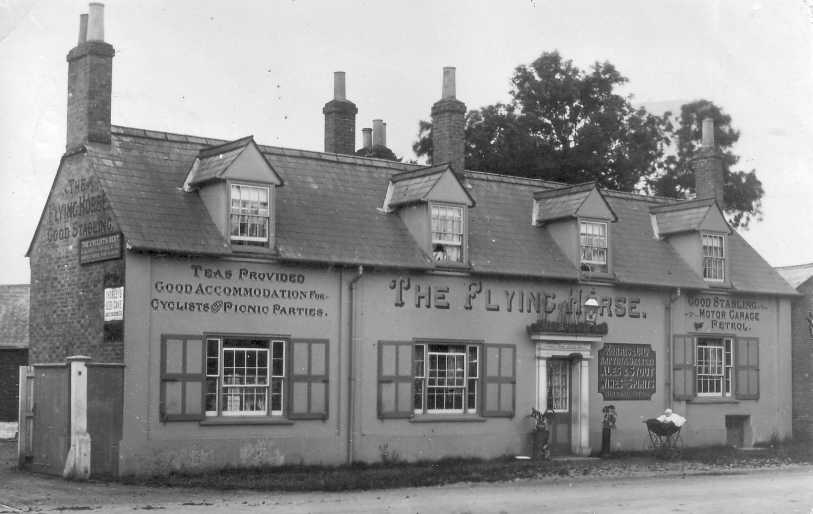 The Flying Horse
J.W.Green merged with Flowers Breweries in 1954 and thereafter took the Flowers name until the company was purchased by Whitbread in 1962. Whitbread ceased to brew and to keep public houses in 2001 but the Flying Horse remains open at the time of writing [Jan 2007] as part of the company's subsidiary Beefeater. It is now owned by Mitchells and Butlers.
Licensees
Scroll down for more.
The Green Man Public House
This is another old inn and it was first mentioned in the will of John Richardson in 1758 when it was known as the Shepherd & Dog. He was recorded as being an "alekeeper" in the record of the baptism of one of his children in 1719 so it may date from that time. It came into the ownership of Biggleswade brewers Wells & Company in 1832. In 1899 it became Wells & Winch until it merged with Greene King in 1963. The Green King plaque is still on the front wall. Under the 1925 Rating Valuation Act it was recorded that they "get Luton Police & a stati fair once a year".
What the Luton Police did there is not recorded but the "stati fair" was a Thurston's fun fair which was held in the field behind the pub, known as Garton's field after the land lady.
 The Green Man
 is a spirit of the wild woods. The original images are in churches as a face peering through or made of leaves and petals; this character is the Will of the Wisp, the Jack of the Green. Some pub signs will show the green man as he appears in English traditional sword dances (in green hats).
Licensees
Scroll down for more.
The Compasses Public House
The first recorded mention of the Compasses is in a conveyance of 1828 when it was called the Red Cow. It was bought by Joseph Morris and remain in the ownership of Morris & Company (Ampthill) Ltd until it was sold to Luton brewers J.W.Green Ltd in 1927. The company merged with Flowers Breweries in 1954 and the new company took the Flowers name; in 1962 Flowers was taken over by Whitbread. The public house closed in 1992 and is now a private house.
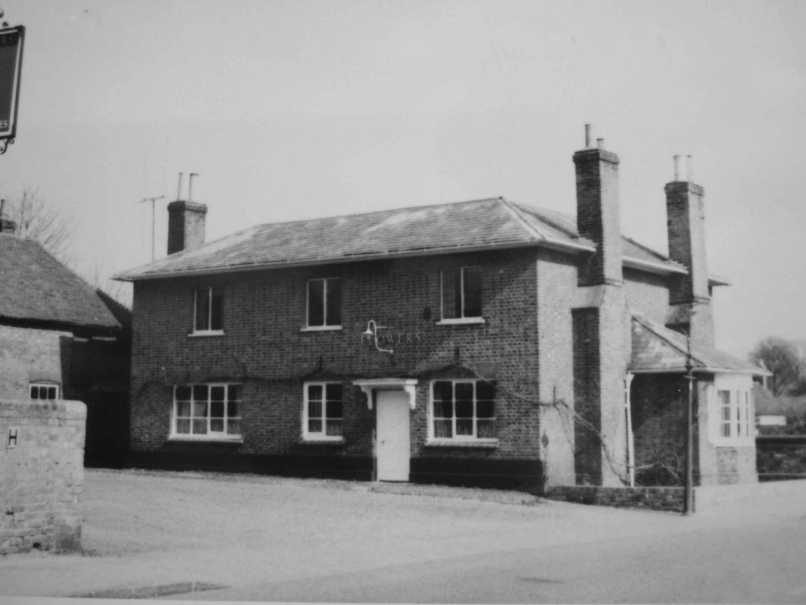 The Compasses
Licensees
Scroll down for more.
The New Inn
As its name suggests, the New Inn is not as old as the Flying Horse and the Green Man. It is first recorded in a directory of 1839. It was owned by Ampthill brewers John and Joseph Morris and remained in this firm's ownership until the company, then called Morris & Company (Ampthill) Limited was sold to Luton brewers J.W.Green Limited in 1927. Green in its turn merged with Flowers Breweries in 1954 and adopted the latter company's name. The New Inn closed in 1959 and is now a private house called Innswood.
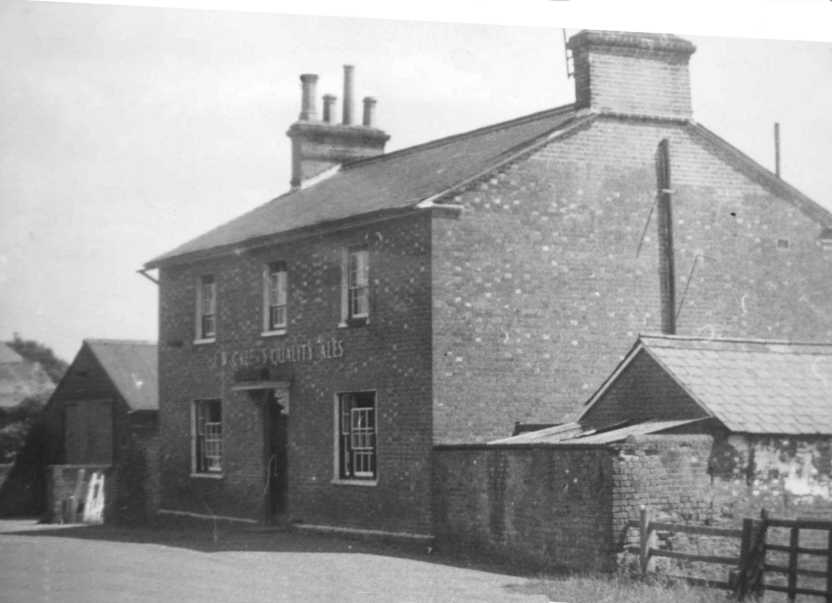 The New Inn
Licensees
Scroll down for more.
The Rising Sun Public House
George Garner is the earliest known licensee holding the licence of a beer retailer from approximately 1851-1881. Under the 1830 Beer Act any householder who paid rates could apply, with a one-off payment of two guineas, to sell beer or cider in his home (usually the front parlour) and even to brew his own on his premises. This is probably how the Rising Sun started. It became a public house, on being granted a full licence, on 11 March 1954 but is now a private house. The cricketer Jack Durston , grandson of George Garner, was born in 1893. He played for Middlesex and in 1921 he played for England against Australia, when he took five wickets for 136 runs.
Rising Sun was a symbol of the east and of optimism. The Sun In Splendour was also a livery badge of Edward IV.
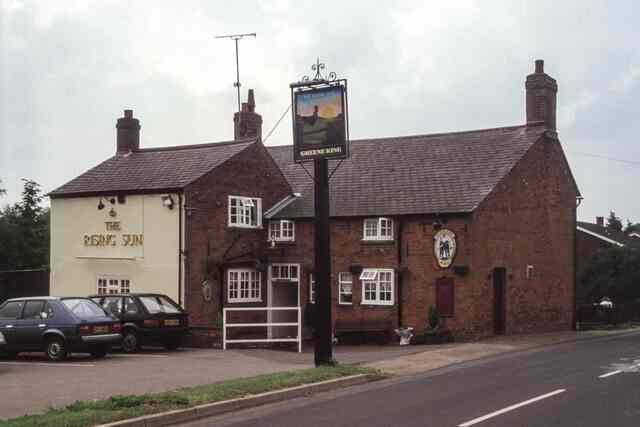 The Rising Sun
Licensees
Scroll down for more.
The Stone Jug Public House
This public house probably started as a beer house as the census for 1861 shows that the occupier, Eliza Issit, was a Baker, Grocer and Beer Retailer. The first mention of it by name is in about 1874 in the licensing register for Ampthill Petty Sessional District.
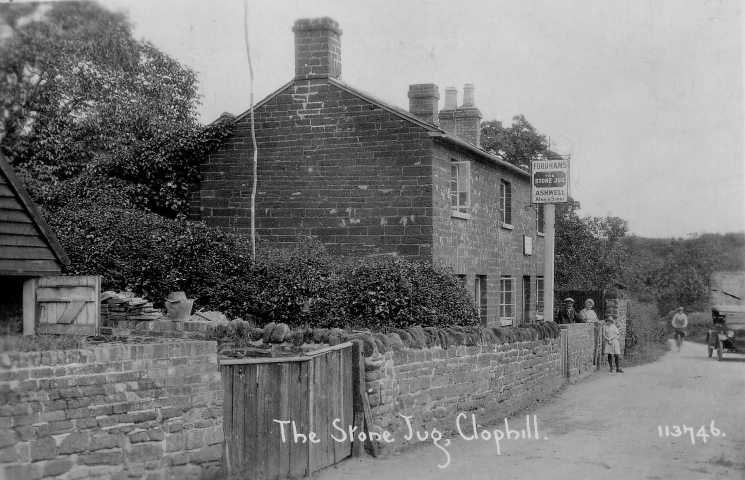 The Stone Jug
Interestingly, it is the only stone-built residence in the village.
Licensees
Scroll down for more.
The Talbot
The exact site of the Talbot is not known. There are three references to it in deeds from the 17th century.
In June 1654 Lord of the Manor of Beadlow, Saint John Charnock of Hulcote mortgaged property to Humphrey Monoux. One of the properties mortgaged was the Talbot Inn, described simply as being near Clophill Bridge. It had twelve acres of land adjoining. Clophill Bridge lies south-east of The Green.
In December 1655 Saint John Charnock conveyed the Manor of Beadlow to Robert, Lord Bruce, later 2nd Earl of Elgin. The inn known "by the sign of the Talbot" in the occupation of John Kent along with 66 acres of arable and 13 acres of pasture in Beadlow was included in the sale. This suggests a location somewhere near Top Farm, Beadlow, rather than near The Green in Clophill although there is a theory that Beadlow was actually at what is now called The Green at the west end of modern Clophill and that old Clophill was at the east end of the village.
The last mention of the inn is in 1685 when the inn with sixty acres of adjoining land and other property was conveyed by Robert, Earl of Ailesbury to Charles Pigeon of Grays Inn [Middlesex] with Simon Urlin of Ampthill as his trustee.
The above information is mostly taken from the Bedfordshire Archives & Records Service website.
